Back to All Events

2026 Green Team Summit

  • Peachtree Road United Methodist Church 3180 Peachtree Road Northeast Atlanta, GA, 30305 United States (map)

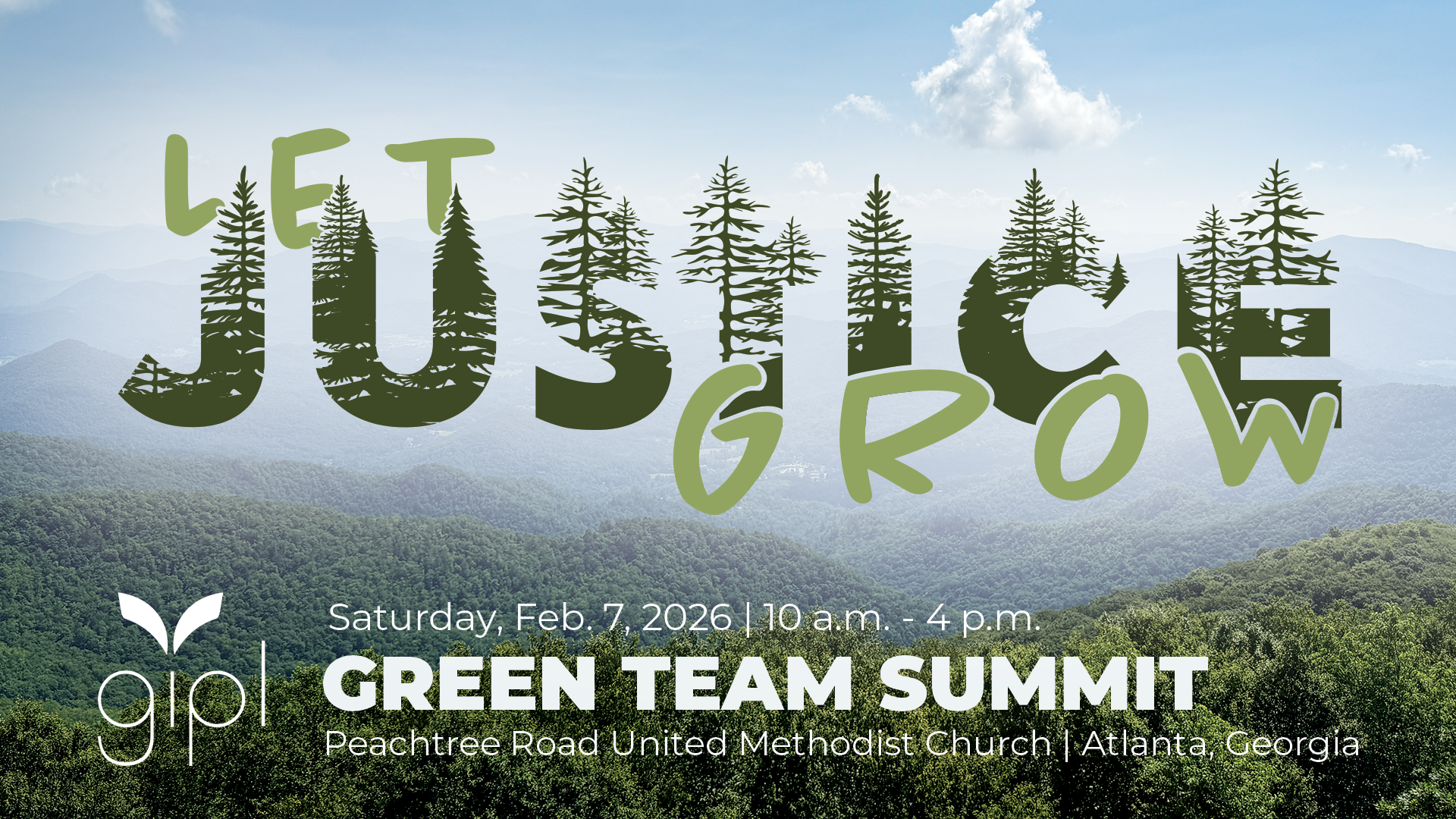
Join GIPL for our 2026 Green Team Summit on Saturday, Feb. 7, 2026, from 10 a.m. - 4 p.m. at Peachtree Road United Methodist Church. This year's theme is “Let Justice Grow.”

This summit invites Green Teams, faith leaders, and environmental activists to dig deep and let justice grow. When we nurture a movement grounded in equity, resilience, and healing, we create space for transformation. Together, we will explore how the wisdom of our faith traditions shapes our call to pursue justice. We will consider how to live into this call through practical climate solutions and how policy efforts can support thriving communities.

Our keynote speaker, Shantha Ready Alonso, executive director of the America the Beautiful for All Coalition, will challenge us to see justice not only as political action but also as a deeply spiritual practice. Then, through a variety of workshops, attendees will gain tools to build and strengthen Green Teams, advance climate justice, and engage in advocacy from the ground up. Together, we will find practical ways to live out our shared call to care for our congregations, our communities, and our Common Home.

REGISTER TODAY

Student tickets are $15, and General Admission tickets are $35. All tickets include snacks and beverages throughout the day, as well as lunch.


KEYNOTE:

Shantha Ready Alonso

Shantha is the Executive Director of the America the Beautiful for All Coalition, which is a community of hundreds of organizations working together at the intersection of conservation, environmental justice, and public health. Before that, Shantha was Director of Intergovernmental and External Affairs at the U.S. Department of the Interior under the leadership of Secretary Deb Haaland. Before serving at Interior, she worked in faith-based organizations, including Creation Justice Ministries, where she was executive director for five years. She holds a Master of Social Work from Washington University in St. Louis, a Master of Pastoral Studies from Eden Theological Seminary, and did her undergraduate work at the University of Notre Dame.


ROUND ONE WORKSHOPS

  • One of the most impactful ways faith communities can address the climate crisis is by advocating for change at the systemic level. In this workshop, participants will receive an overview of the Georgia Water Coalition’s priority issues for the 2026 legislative session and learn practical ways to engage in effective advocacy through letter writing, meeting with elected officials, and other actions.

    This workshop is designed for:
    Faith leaders, Green Team members, and community advocates who want to deepen their understanding of the legislative process and take informed, faith-rooted action to advance climate and water justice in Georgia.

    This workshop will be led by:
    Bob Sherrier of the Southern Environmental Law Center (SELC).

  • This panel highlights how diverse faith communities across Georgia are advancing environmental justice and building local resilience through on-the-ground solutions. Featuring leaders from multiple faith traditions, the conversation will explore how faith-rooted values inspire action on clean energy, climate resilience, environmental justice, and caring for our shared home. Panelists will share concrete examples of impact, including the installation of solar and battery storage systems that strengthen community resilience, faith-led greening efforts such as tree plantings at schools and houses of worship, and organizing responses to environmental justice challenges facing communities—including the impacts of the wood pellet industry. Together, these stories offer both practical insight and inspiration for faith communities seeking to lead toward a more just, resilient, and sustainable future.

    This workshop is designed for:
    Faith leaders, Green Team members, and community advocates seeking practical examples, replicable models, and inspiration for advancing environmental justice through interfaith collaboration and local action.

    Panelists include:
    Dr. Treeva Gear, Dogwood Alliance; Piney Grove Baptist Church
    Pastor Will Thomas, New Bethel AME
    Dr. Muslimah ’Ali Najee-ullah, Mohammed Schools of Atlanta / The Atlanta Masjid of Al-Islam

  • The story of pipelines in Georgia is more than a fight over infrastructure; it’s a deeper question of who bears the cost, who benefits, and what faithful stewardship demands of us. In this workshop, we’ll explore the moral and spiritual stakes of the South System Expansion 4 (SSE4) pipeline project proposed to cut through middle Georgia, grounding the conversation in the lived experiences of communities along its path. We’ll look beyond the maps and memos to the people: congregations navigating land loss, vulnerable neighborhoods facing compounding risks, and the growing moral voice emerging across Georgia. Together, we’ll reflect on how faith communities can show up with clarity, courage, and compassion in moments of extraction and injustice.

    This workshop is designed for:
    Faith leaders and community organizers, particularly from Columbus, Macon, Milledgeville, and August, seeking a deeper understanding of pipeline impacts and the role of faith-rooted organizing and moral witness in energy justice work.

    This workshop will be led by:
    Marqus Cole, GIPL Organizing Director

  • Using moral imagination, participants will step outside of linear time to engage in a powerful, interactive ritual where present and future beings meet. Sitting across from each other, those living in the present will be interviewed by participants taking on the role of future beings from the year 2225. Through thoughtful questions and shared reflection, the ritual invites participants to imagine what life could be like and how, despite today’s challenges, a life-sustaining society was made possible. Rooted in the work of Joanna Macy and The Work That Reconnects, this experience creates space for hope and collective visioning.

    This workshop is designed for:
    Anyone interested in an interactive, reflective experience that helps envision a just and life-giving world we are called to create for future generations.

    This workshop will be led by:
    Beth Remmes, GIPL Coastal Outreach and Resiliency Coordinator

  • Ready to make your home more energy-efficient and lower your utility bills? This practical workshop will walk participants through how to plan, fund, and maximize home energy upgrades with confidence. Experts from Southface Institute will cover how to identify energy- and cost-saving opportunities, from conducting a home energy audit to selecting the right contractor and defining an effective project scope. Participants will also hear from Self-Help Credit Union about financing options to help manage upfront costs, and from the Georgia Environmental Finance Authority (GEFA) about rebates and weatherization assistance available to Georgia residents. Whether you are ready to start a project or simply exploring your options, this session offers clear guidance and trusted local resources to help you take the next step.

    This workshop is designed for:
    Homeowners, renters, and faith community members interested in reducing personal energy costs, improving home comfort, and learning about financing and incentive programs available in Georgia.

    This workshop will be led by:
    Representatives from Southface Institute, Self-Help Credit Union, and the Georgia Environmental Finance Authority (GEFA)

  • What might change if faith communities intentionally centered young people’s voices in their climate discernment and action? In this workshop, participants will explore an innovative, youth-centered, intergenerational dialogue practice that brings together theological reflection, collective decision-making, and concrete climate action. Drawing from a recent GIPL project, the session introduces a deliberative tool that helps congregations weigh the benefits and challenges of specific actions while bridging generational divides. By engaging both youth and adults in shared conversation, this approach strengthens mission, deepens relationships, and equips communities to move forward together in faithful ways.

    This workshop is designed for:
    Faith leaders, youth pastors, and youth who are interested in engaging in dialogue to help their congregation discern their next most faithful step in going green.

    This workshop will be led by:
    Meagan Williams, GIPL Program Coordinator, and Dr. Beth Corrie, GIPL Scholar in Residence

  • This workshop invites participants into embodied reflection, creative expression, and shared meaning-making around a central question: What does your faith, tradition, or spiritual worldview teach about caring for the Earth—and how is that teaching alive, challenged, or evolving within you right now? Through contemplative practice, guided art-making, and interfaith dialogue, participants will explore this question in community. The session creates space for listening across traditions, honoring difference, and deepening connection to our shared responsibility to care for our Common Home.

    This workshop is designed for:
    Participants seeking a hands-on, creative, and interfaith space for reflection, dialogue, and spiritual exploration around care for the Earth.

    This workshop will be led by:
    McKenzie Wren of Wren Consulting

ROUND TWO WORKSHOPS

  • As communities of faith increasingly step into leadership on climate action, clean energy offers a powerful way to model stewardship, resilience, and long-term sustainability. In this workshop, participants will explore how congregations of all sizes can embrace solar energy and electric vehicle (EV) charging infrastructure as practical, mission-aligned investments. The session will cover the environmental and financial benefits of solar installations and EV charging stations, along with accessible pathways to plan, finance, and implement these projects. Whether a congregation is just beginning to explore clean energy or ready to take the next step, this workshop offers practical guidance, inspiration, and tools to help turn faith into power—literally.

    This workshop is designed for:
    Faith leaders and congregational decision-makers (trustees, board members, etc.) interested in clean energy solutions that strengthen community resilience, reduce costs, and align climate action with mission.

    This workshop will be led by:
    Hannah Shultz, GIPL Program Director

  • Faith communities have long played a powerful role in shaping public consciousness and inspiring social change. In this interactive workshop, participants will explore how congregations can use social media, op-eds, and other public platforms to share their values, inspire action, and help shape the conversation around environmental justice. Through practical exercises and real-world examples, the session will introduce strategies for narrative organizing, reaching diverse audiences, and strengthening a congregation’s public witness. Participants will leave with concrete tools to communicate a hopeful, faith-rooted climate message with clarity and conviction.

    This workshop is designed for:
    Clergy, lay leaders, Green Team members, and congregational communicators who want to build confidence and skill in using public platforms to advocate for climate justice.

    This workshop will be led by:
    Rev. Jay Horton, GIPL Communications Manager

  • In 2025, congregations across Georgia stepped into civic engagement with clarity and courage, helping shape the statewide conversation on utility justice. In this workshop, participants will reflect on lessons learned. We’ll revisit the last election cycle and our GIPL GOTV (Get-Out-The-Vote) efforts through the lens of faithful presence: how congregations mobilized, what messages resonated, and how civic discipleship took root in unexpected places. The session will then turn toward 2026; a year that will demand deeper formation, stronger coordination, and renewed commitment to ensuring every Georgian has a voice in decisions that shape our energy future. Participants will leave with a clearer understanding of where the work is heading and how congregations can engage in consistent, grounded, and effective civic witness.

    This workshop is designed for:
    Faith leaders, Green Team members, and community advocates interested in civic engagement, utility justice, and building long-term, faith-rooted advocacy strategies.

    This workshop will be led by:
    Marqus Cole, GIPL Organizing Director

  • The most effective Resilience Hubs are grounded in the real needs, strengths, and relationships of the communities they serve. In this workshop, participants will explore how community-centered engagement shapes strong, responsive Resilience Hub programming. The session will introduce what effective community engagement sessions look like in practice and invite participants to begin envisioning programs and services their houses of worship could offer to support everyday needs, strengthen social cohesion, and enhance emergency preparedness. Through guided reflection and practical examples, congregations will gain tools to thoughtfully discern how they might serve as a Resilience Hub in their community.

    This workshop is designed for:
    Congregations and faith leaders interested in exploring how their faith community could serve as a Resilience Hub and support community resilience through needs-based, relational programming.

    This workshop will be led by:
    Beth Remmes, GIPL’s Coastal Outreach and Resiliency Coordinator

  • Stories move people, and when grounded in purpose, they can inspire communities to take action. In this energizing and interactive workshop, participants will explore how storytelling can strengthen organizing efforts and deepen engagement within Green Teams and congregations. Drawing on the transformative power of narrative, the session invites participants to reflect on the personal “why” that fuels their commitment to climate and justice work and to understand how lived experience, passion, and self-interest shape effective leadership. Participants will learn how to elevate both individual stories and the shared story of their Green Team to build momentum, foster connection, and sustain long-term impact in moments when progress feels challenging.

    This workshop is designed for:
    Green Team members, faith leaders, and community organizers who want to strengthen their organizing efforts by using personal and collective storytelling to inspire action and build lasting power.

    This workshop will be led by:
    Ty Grier, GIPL South Georgia Organizer, and Brittany Jones-Chukura of Black Voters Matter Fund

  • In this workshop, participants will explore ecopoetry as a spiritual practice that invites deeper attention to Sacred Earth and our place within it. Together, we will reflect on how paying attention to the natural world can become a form of prayer, contemplation, and connection. The session will introduce ecopoetry through a few examples from notable writers before moving into hands-on creative practice. Participants will be guided through writing their own ecopoems and creating a simple collage to visually represent their work. You will leave with creative tools and ideas to share with your Green Team or congregation, nurturing imagination, reflection, and care for Sacred Earth.

    This workshop is designed for:
    Anyone interested in creative expression, spiritual reflection, and exploring new ways to engage faith, art, and care for Sacred Earth!

    This workshop will be led by:
    Cate Tedford, GIPL Program Fellow, and Kyarah Barton of Midnight Riot

  • In this workshop, participants will learn how faith communities across Georgia are advancing tree equity and environmental justice through local greening efforts. The session will highlight GIPL’s tree planting and adoption program, which focuses on increasing access to trees in communities that have historically been excluded from climate investments. Participants will explore how expanding native tree canopy (including fruit and nut trees) supports public health, climate resilience, and local food access. The workshop will also examine the role congregations can play by planting trees on their campuses and/or hosting community tree-adoption events that strengthen neighborhood wellbeing.

    This workshop is designed for:
    Congregations and community members interested in planting trees, restoring canopy coverage across Georgia, and/or hosting tree-adoption events as part of their commitment to environmental justice and community resilience.

    This workshop will be led by:
    Heather Franklin, GIPL ReWilding Program Coordinator

THANK YOU SPONSORS!


Interested in supporting this shared learning event? Learn more about sponsorship opportunities below or email Stephanie Williams at stephanie@gipl.org.

LEARN MORE
Previous
Previous
February 1

Tu B'Shvat Tree Planting

Next
Next
February 12

The True Cost of SSE4: Columbus Listening Session