A Call to Care for Creation
Written by Gayle Chimo, Creation Justice Ambassador and GIPL Green Team member at Oconee Street United Methodist Church. Photos by Gayle Chimo.
At Georgia Interfaith Power & Light, we encourage our communities to express their own faith-based commitment to environmental action, in the language of their faith traditions. This blog post comes from our Christian community, and is adapted from a speech given by Gayle Chimo, Creation Justice Ambassador at Oconee Street United Methodist Church, for their observance of the Season of Creation and the new Feast Day Celebration of Salt, Soil and Seawater.
I would like to talk about my calling in Creation Justice work and caring for God’s natural world.
First let me refer to today’s first reading, John 1: 1-5:
“In the beginning was the Word, and the Word was with God, and the Word was God. He was in the beginning with God. All things came into being through him, and without him not one thing came into being. What has come into being in him was life, and the life was the light of all people. The light shines in the darkness, and the darkness did not overtake it.” (NRSVUE)
God’s very character is light, as we learn from the verse. Light features in God’s first actions, as God acts to bring order to the chaos when suddenly, out of nothing, there was something. In the beginning light flooded the universe, the wind-swept waters separated, and dry land and oceans appeared. And it was good.
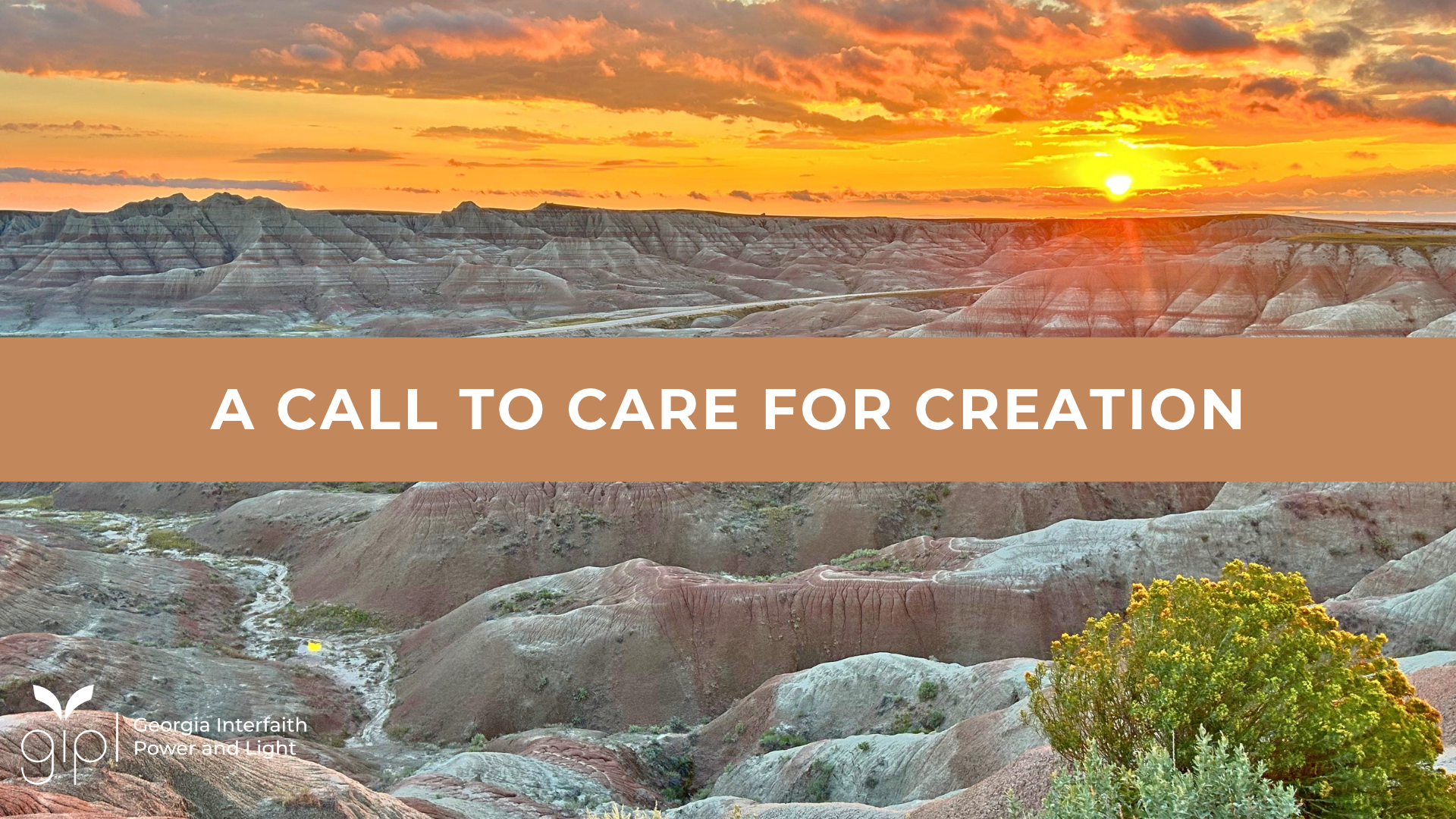
I can only imagine God in the darkness at the beginning flipping on that light switch. As I looked out over the Badlands on our recent road trip, I thought about that beginning. I saw the vastness of rock formations containing the bands of time, the cooling and drying of the earth.
On our quest to visit national parks, I saw that wondrous design of Creation all together, whole, fertile, and balanced. We, as humankind, are created in a world teeming with life. God commands us to keep it in good order.
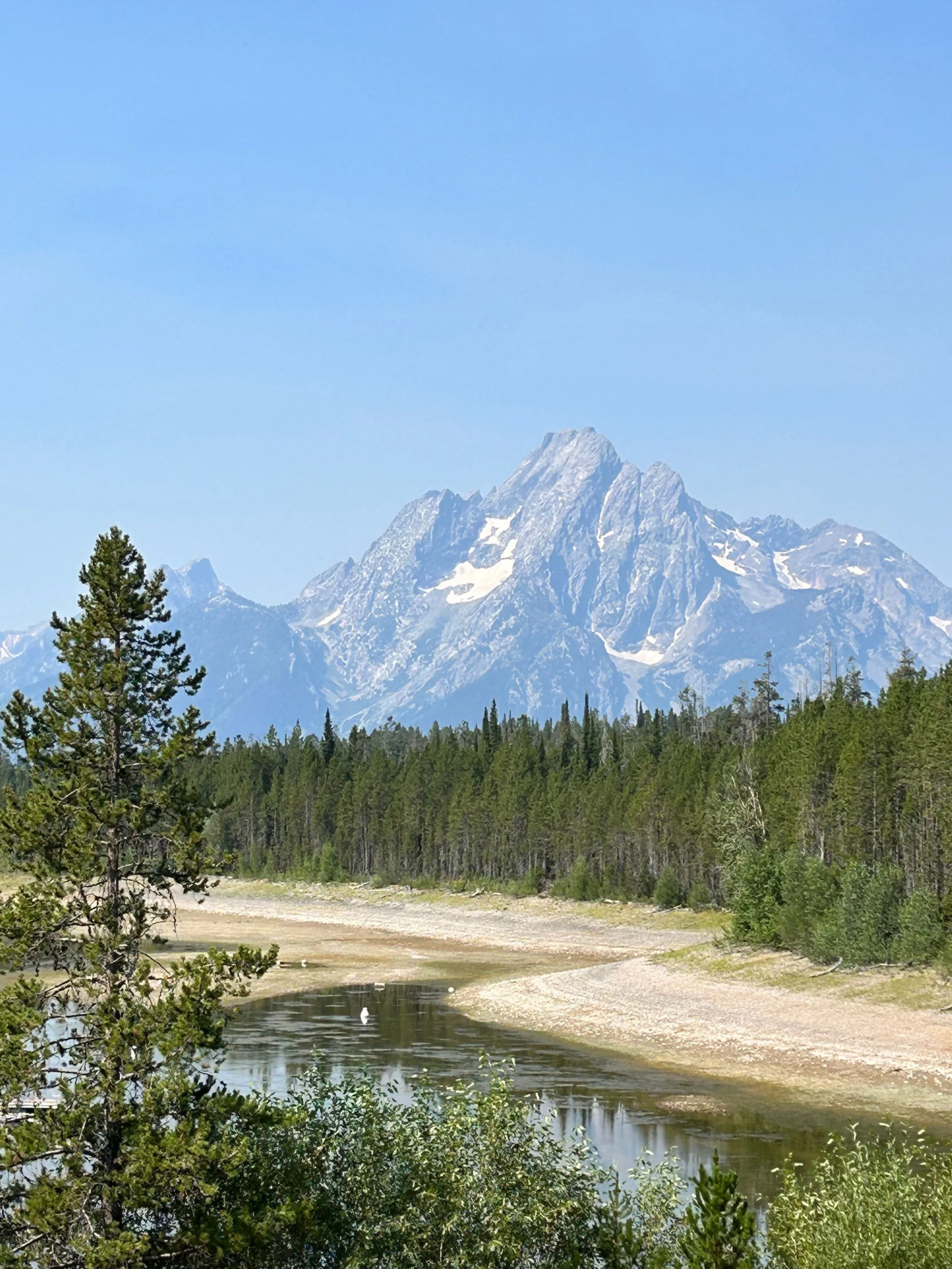
We road tripped through 11 states, witnessing Creation. From the banks of the Big Sioux River in Sioux Falls, with 123 acres of green space and rushing waterfalls; to the semi-arid land with steep pinnacles and spires in the Badlands; to the waterfalls and canyons in the Black Hills; to the iconic landscapes of the summit of the Grand Tetons; to the towering waterfalls dropping into deep canyons; to the bubbling mud-pots and hot spring terraces of the Greater Yellowstone Ecosystem, I saw God’s goodness.
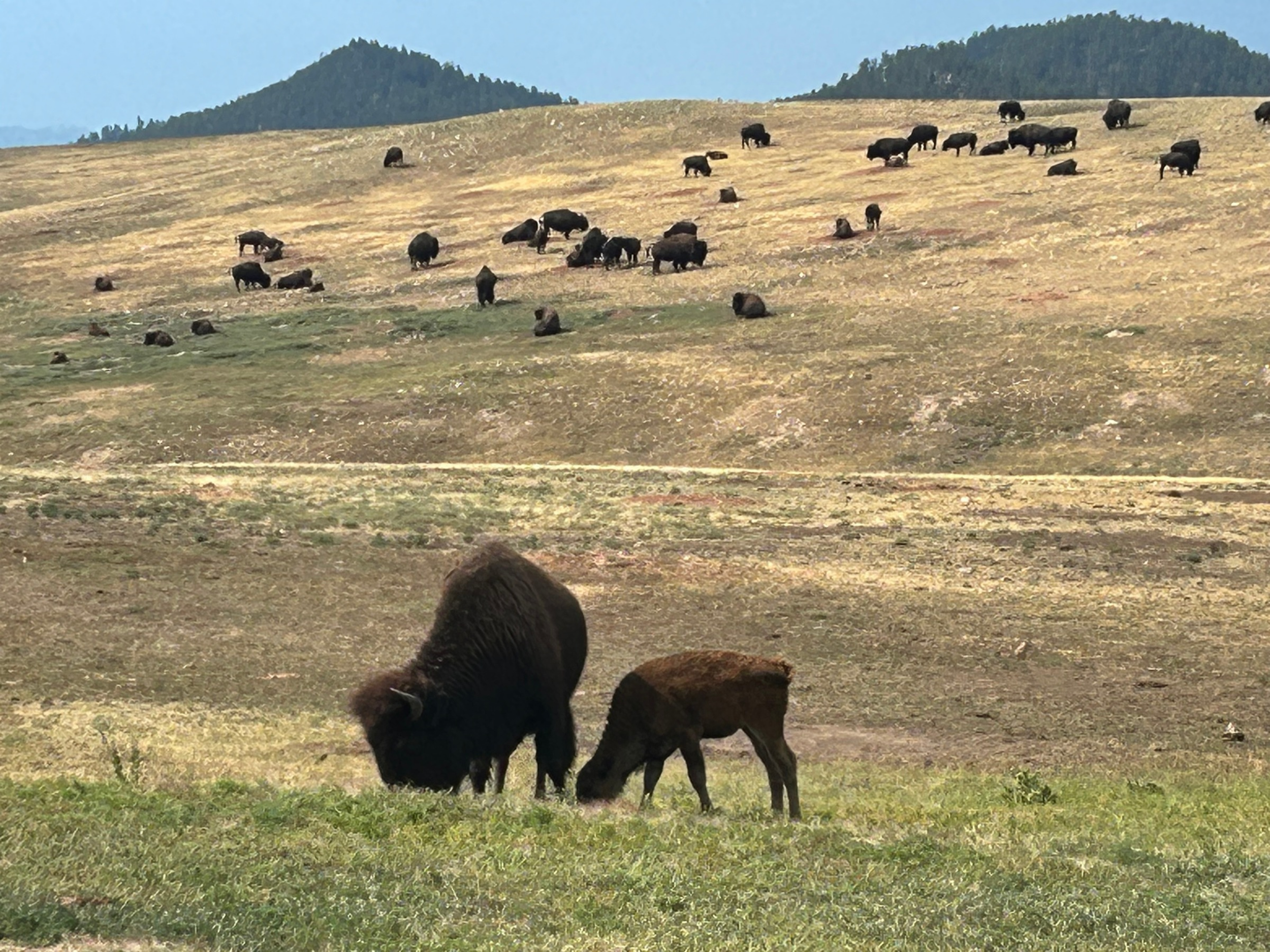
I was able to observe wildlife in their natural habitat, protected in national forests and parks: wild horses, elk, pronghorn, deer, and a bald eagle hunting the White River at sunrise. I found entertainment in the prairie dog towns where the ground is marked with burrows, with the little black tailed prairie dogs popping their heads up, standing at attention and watching the cars go by. We stopped and listened to their squeaky barking in amazement. We watched herds of bison move across the prairie and navigate a river crossing. There was so much beauty and wonder to take in: the flora and fauna, wildflowers, and stunning sunsets.
I am in complete awe of God’s Creation, but there is a sadness that creeps in, because I know that this natural world needs protecting.
Seeing the largest active coal mine extraction in the world and the oil wells pumping up and down in the Salt Creek oil field in Wyoming, extracting crude oil from Mother Earth, brought deep sadness to my soul.
The systems we are living in are not sustainable.
The extraction of our resources. The expansion of dirty fossil fuel when we know that clean renewable energy is available. The overconsumption and industrial farming. The commercial fishing that scrapes up the ocean floor and everything in it to catch a few select fish, while the other marine life gets discarded like garbage. The clearing of forests for logging. The night sky diminishing, with light pollution creating challenges for migrating birds.
During my travels, I watched two amazing little hummingbirds spiraling up in unison, and I wondered how they would migrate without the guidance of our sky. With the decline of bees, butterflies, and other insects due to pesticide use, this brings real concern as to how our food sources could be impacted.
The practice of industrial farming uses chemicals that not only deplete the soil of nutrients but add harmful toxins. Iowa isn’t talking about affordability in this election cycle; they’re talking about cancer. This state has the second-highest rate of cancer nationwide due to chemical farming practices. A culture change is needed in how we farm.
The U.S. Forest Service is working to remove protections for 45 million acres of wild forest land, including areas with ancient old-growth trees. These forests help keep rivers and streams clean. They cleanse the air we breathe and help form our atmosphere. They provide shelter for wild animals from grizzly bears to ladybugs, and everything in between. And best of all, these forests belong to each and every one of us.
They are, as former Forest Service Chief Mike Dombeck put it, a “down payment on the well-being of future generations.”
We have all seen and felt the consequences of the warming planet over this summer, with heat waves, wildfires, melting glaciers and floods. The destruction and loss of human life is heartbreaking. They can take the words “climate change” out of textbooks and government documents, but we know what we feel and see. Human-induced climate change can’t be denied any longer.
We are called to practice responsible stewardship and to live in right relationship with the Creator and with the whole of the natural world, rather than treating Creation as if it were placed here solely for humanity’s use.
There is definitely an intersection of environmental injustice and racial injustice here. Those who suffer the primary impact of harm are those who have contributed the least to the problem. We can no longer afford to ignore our covenant with God to care for Creation and humanity.
Climate change doesn’t discriminate, but the ability to respond to climate disasters does.
Wildfires in California, for instance, are not avoiding fancy homes. Snowstorms, hailstorms, and tornadoes are not discriminating either. But fully recovering from these increasingly unnatural disasters is very difficult, almost impossible, for communities of color, indigenous communities, small rural towns, and traditional fishing communities. In addition, new polluting industrial sites are often placed in Black & Brown communities.
The work can be overwhelming, but I know God is watching and He is with us on this journey. He opens my eyes to a growing movement, a resurgence towards a better future. I see:
More energy coming from renewables, even in this political environment. In May, renewables surpassed fossil fuel usage. This momentum must continue.
Industrial farming being replaced with regenerative farming, feeding the soil with a diversity of plants and using non-toxic herbicides.
Manufacturers changing their packaging.
Courts starting to stand up to actions that put profit over people.
People speaking out and writing letters against policies and industries that harm the Earth.
Communities doing what they can: recycling, composting, planting native pollinator gardens and supporting businesses that make changes for the better.
Here in the United Methodist Global Missions, a project to create climate resilience hubs is in the works to mitigate weather related events and to help communities recover.
At Oconee Street UMC, we have a solar installation coming! This will improve the finances of the church while shrinking our carbon footprint. We are also working on grants for back-up batteries.
These are among the many ways we are caring for God’s Creation. Thank you, team, and thank you OSUMC for supporting the Green Team!
It’s time to change our mindset toward implementing solutions. Indigenous culture and knowledge is an inspiration for addressing the climate crisis by caring for and protecting land for the next 7 generations. This country needs a cultural shift. It must become part of our culture to take care of Mother Earth as Mother Earth takes care of us.
I invite you to walk with me in God’s light, caring for God’s natural world and for humanity.