How Composting and Stewardship Grow Faith
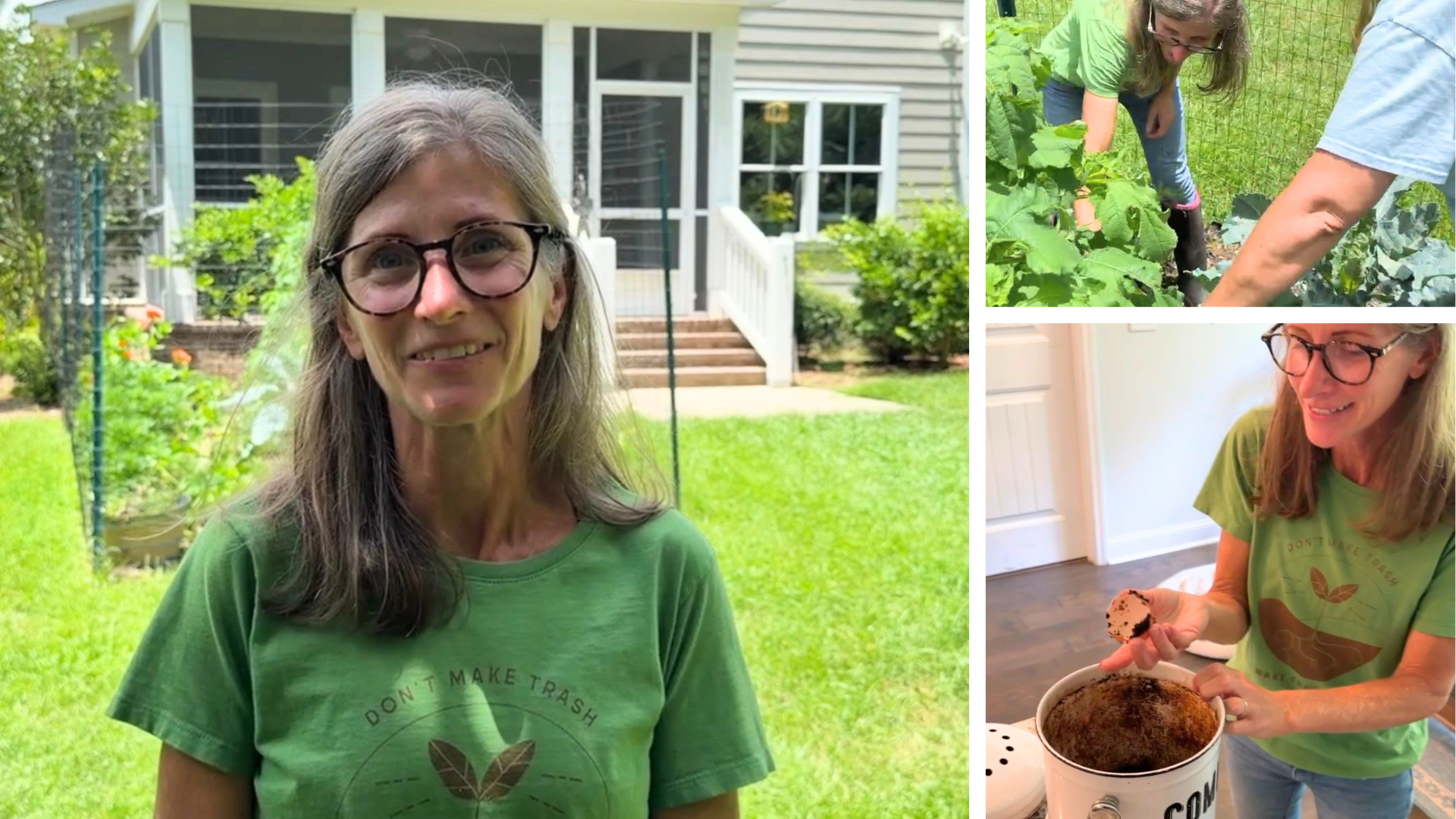
Written by Jacquelyn Clark, GIPL Communications Fellow. Pictured above is Jenny Watkins.
After a difficult season of grief and frustration, Jenny Watkins found healing, hope, and a deeper connection to her faith through composting.
"Composting found me."
That's how Jenny describes the practice that has shaped her understanding of faith, environmental stewardship, and God's design for creation.
Jenny, who lives just west of Savannah on the Georgia coast, spends much of her time tending a garden in her backyard in Pooler, Georgia. But her journey into composting did not begin with gardening. A difficult experience in her professional life led her to reconsider the way people think about waste, value, and purpose.
"I got an up-close experience with a management style that I felt was treating people like something that could be disposable," she says.
The experience prompted her to reflect on the ways she may have been participating in a similar mindset. Her realization shaped her approach to environmental stewardship.
"What I realized is God did not make waste. Waste was not part of his divine design."
Jenny often thinks about the concept of biomimicry, a perspective she has discussed with GIPL's Coastal Outreach & Resiliency Coordinator, Beth Remmes.
"We should be imitating how God designed nature.”
In nature, nothing is wasted. Dead plants and animals become nutrients that support new life. Composting helps us see those cycles of renewal in a tangible way.
"When a plant or an animal dies, it becomes new life for another plant or animal."
Approaching composting from a zero-waste perspective helped Jenny better understand what she sees as God's design for creation.
"Everything has a purpose. It gave me a lot of hope and healing to understand and embrace that."
As she continued composting and learning, Jenny found a community of people seeking to be environmental stewards and live more in alignment with natural systems.
"It's like the new life that springs up from the compost we make."
She also discovered that her understanding of community was expanding.
"The community is not always human."
Through composting, she came to see plants, animals, and ecosystems as part of the interconnected community of creation. The experience also encouraged her to think more deeply about how food systems, resource sharing, and local decision-making shape the places where people live.
The lesson is simple: everything is connected.
"The Creator smiles on our activities to participate with him in restoration and redemption of this beautiful Earth he has created for us."
Jenny’s story reflects the goals of GIPL's Zero-Waste Program. Through its partnership with Drawdown Georgia, GIPL works with faith communities across the state to address two significant environmental challenges: food waste and plastic waste. Composting is one practical way faith communities can reduce waste while caring for the land and the communities around them.
For communities interested in getting started, Jenny encourages people not to overthink the process.
"Don't be afraid to start small."
She points to simple steps such as collecting coffee grounds for plant soil, food scraps, and other compostable materials that might otherwise be thrown away.
She also encourages congregations to consider the stakeholders involved. Every composting program will look different depending on the facility, the size of the community, and any food service or hospitality ministries already in place. She recommends involving facility managers, hospitality teams, and others who can help feed ideas and support the effort.
Looking to Start a Compost Program?
Through GIPL's Zero-Waste Program and partnership with Drawdown Georgia, faith communities can access resources, guidance, and practical support for developing composting programs that fit their unique needs.
Remember, "Don't be afraid to start small.”
To learn more about GIPL's Zero-Waste Program, visit our Zero Waste page or email info@gipl.org to get pointed in the right direction.