Can These Bones Live?
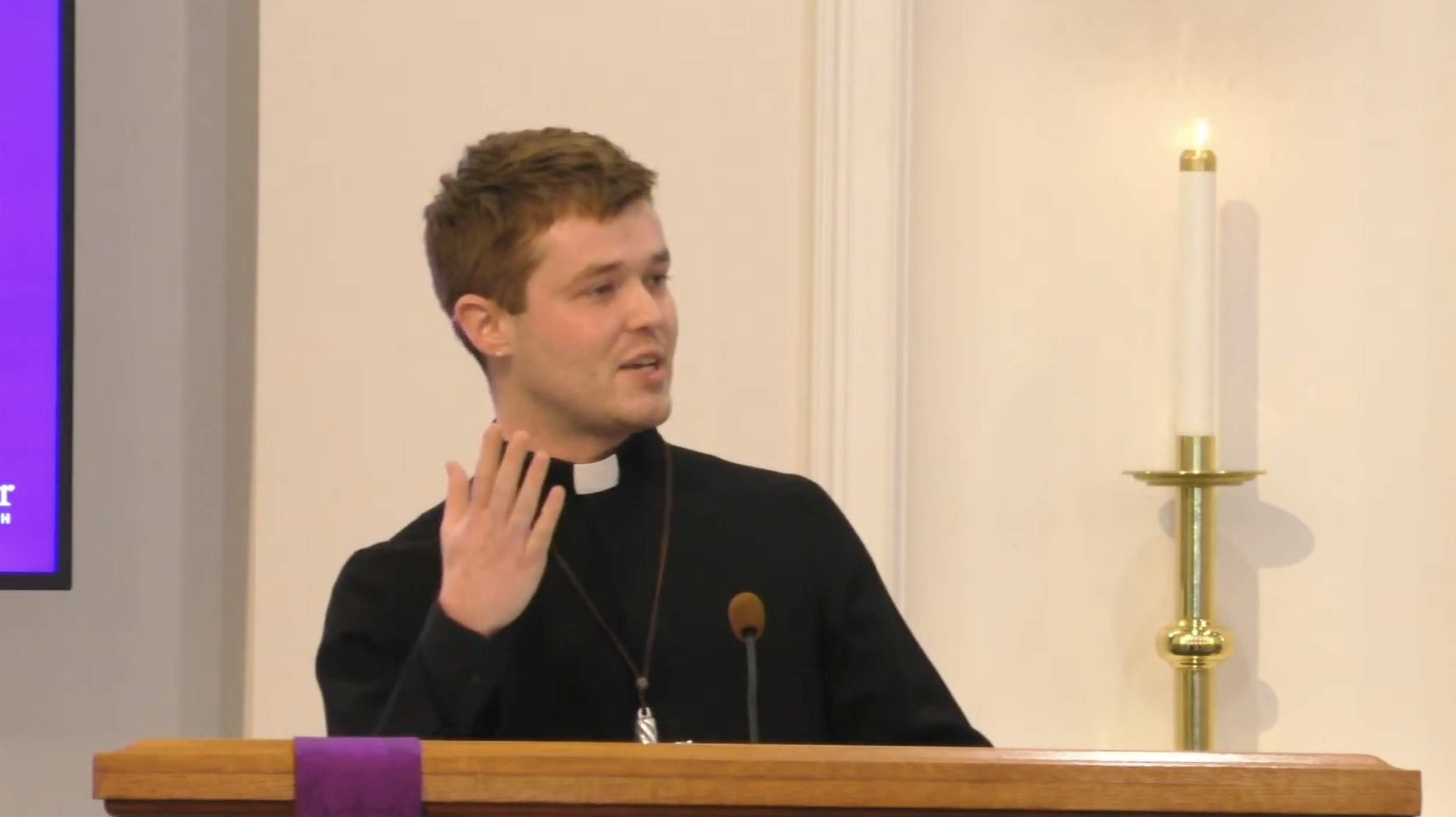
Written and delivered by Rev. Jay Horton at Westminster Presbyterian Church in Rome, Georgia, on March 22, 2026.
Scripture Reading – Ezekiel 37:1-14 (NRSVue)
The hand of the Lord came upon me, and he brought me out by the spirit of the Lord and set me down in the middle of a valley; it was full of bones. 2 He led me all around them; there were very many lying in the valley, and they were very dry. 3 He said to me, “Mortal, can these bones live?” I answered, “O Lord God, you know.” 4 Then he said to me, “Prophesy to these bones and say to them: O dry bones, hear the word of the Lord. 5 Thus says the Lord God to these bones: I will cause breath to enter you, and you shall live. 6 I will lay sinews on you and will cause flesh to come upon you and cover you with skin and put breath in you, and you shall live, and you shall know that I am the Lord.”
7 So I prophesied as I had been commanded, and as I prophesied, suddenly there was a noise, a rattling, and the bones came together, bone to its bone. 8 I looked, and there were sinews on them, and flesh had come upon them, and skin had covered them, but there was no breath in them. 9 Then he said to me, “Prophesy to the breath, prophesy, mortal, and say to the breath: Thus says the Lord God: Come from the four winds, O breath, and breathe upon these slain, that they may live.” 10 I prophesied as he commanded me, and the breath came into them, and they lived and stood on their feet, a vast multitude.
11 Then he said to me, “Mortal, these bones are the whole house of Israel. They say, ‘Our bones are dried up, and our hope is lost; we are cut off completely.’ 12 Therefore prophesy and say to them: Thus says the Lord God: I am going to open your graves and bring you up from your graves, O my people, and I will bring you back to the land of Israel. 13 And you shall know that I am the Lord when I open your graves and bring you up from your graves, O my people. 14 I will put my spirit within you, and you shall live, and I will place you on your own soil; then you shall know that I, the Lord, have spoken and will act, says the Lord.”
Good morning, beloved.
It is so good to be back in Rome during this Lenten season.
Spending my high school years in Rome, and eventually graduating from Rome High School, some of my fondest memories of childhood come from this city — and specifically the nature that surrounds it and flows through it. The seven hills and three rivers. It was paradise for a teenager who loved the outdoors, and for someone who eventually finds himself as a pastor working in ministry for an environmental nonprofit.
My dad was the Chief Operating Officer of the WinShape Foundation at Berry College, and I spent many a morning and afternoon running the pine trails of the mountain campus, on the cross country team or just by myself for fun.
I loved the fresh air blowing past me and smelling flowers in the fields, seeing their bright colors as they bloom. I'm a great fan of cows too, and loved hearing the moos and braying of the horses. The birds chirping.
Running there was blissful.
I remember one day, though, running along, and in the midst of the beautiful mountain landscape and experience, I stumbled across a dead deer. Running full force, I had to swerve to avoid running right over its decaying carcass.
Who knows exactly how it died, but what I knew was that it smelled, and the ravens that flew off its remains as I approached scared the heck out of me.
I wanted out of there as quickly as possible.
As I ran back to my car, I couldn't help but contemplate this abrupt reality check. The beauty and joy of my run ended in a second as I was confronted by mortality in all its goriness. What can we do but swerve?
I just came back from a funeral this weekend for a good family friend — practically an aunt. My mom and Michelle grew up together. For nearly 50 years they were inseparable, born only 24 days apart in February 1969. The Michelles (my mom's name is also Michelle) played basketball together, ushered at the West Virginia State Fair together, went to college at Radford together, and raised us kids knowing and loving each other.
She has two daughters around my age and my sisters' ages, so it worked out perfectly. She was joyful and fun-loving with an exceptional work ethic — a faithful woman with strength of will, which makes what happened next all the more heartbreaking.
In 2023, she was diagnosed with ovarian cancer, and this year, after rounds and rounds of chemotherapy, she lost the battle, leaving her daughters, her husband Gray, her mother, her sister, my mom, and all the rest of us who loved her wondering what we do next.
How do we find hope when confronted with seemingly insurmountable tragedy? When forced to face mortality head-on, with little option for swerving? These are the questions of Lent. And I think they are questions the prophet Ezekiel wrestled with as well.
When we look at today's passage and the experience of the prophet, we see a man forced to reckon with one of the worst traumas an Israelite priest could have imagined. Before today's reading, Ezekiel learns of the destruction of the Temple in Jerusalem, the seat of God, and the flattening of the entire city. After 11 years living in exile and captivity, experiencing great personal and spiritual turmoil, Ezekiel was justifiably devastated. This could have been the thing that broke the camel's back.
And yet — and yet — it doesn't.
Ezekiel has this vision of himself standing in a valley of dry, dusty bones, a metaphor we learn for the spiritual, emotional, and psychological state of not only himself, but the entirety of the Israelite people after everything they had experienced. And God asks him: "Mortal, can these bones live?" Do you think these dry, dusty, decaying bones have any hope of life again?
Ezekiel responds in faith: "If you have something to do with it, God." It's not the boldest answer, but it is a faithful one. One I’m not always sure I would have made or could have made.
God… they’re bones.
Yet, Ezekiel confidently declares, the end is not the end if you have something to do with it, God. You know.
And God does know. God says to Ezekiel: I know that you need to speak life into these bones. Do not give in to death and decay, instead prophesy. Tell these bones to listen to me, and I, the Lord, your God, will give them new flesh and new muscle, and will invite them into new life.
And suddenly, the scripture says, "there was a noise, a rattling, and the bones came together, bone to its bone. There were sinews on them, and flesh had come upon them, and skin had covered them" — but they were without breath.
They had a body, but no spirit.
So, harkening back to Genesis, God says: "Prophesy to the breath,” Ezekiel, “prophesy, mortal, and say to the breath,” fill these people's lungs with my spirit. "Come from the four winds, O breath, and breathe upon these creatures, that they may live."
And Ezekiel does. And they do.
And God says: have hope. "Know that I am the Lord when I open your graves and bring you up from your graves, O my people." When I "put my spirit within you, and declare you shall live."
When "I will place you on your own soil" — and you thrive.
All around us we seem to be living in a world of death, destruction, and chaos. Traumas, possibly, even worse than what Ezekiel went through.
Wars rage in Ukraine and the Middle East. Migrants are being forced to flee, only to find cages. Tornadoes, wildfires, and extreme weather grow by the day as we continue to do little to curb fossil fuel use and address climate change. The homeless still sleep on streets, and children who leave school still go hungry at home. And this is not even to mention the personal weights we all carry — individual struggles with addiction and disease, family issues, and more.
It's a lot. A lot a lot. Often too much.
And if you're anything like me, you read the news and find yourself asking: Can these bones live? Can our families and faith communities survive? Can this husk of a planet thrive? Can this skeleton of a body be revived?
Where is our faith like Ezekiel? Can we truly say, Oh Lord, our God, you know?
Because God does know, and God says: Yes.
Yes, my hope is on the horizon. Easter is just around the corner. Just remember my Word, my promises — and prophesy to these bones.
Sure, death is part of the journey, but we’ve seen the end of the story, we’ve traveled this valley before, and we know death doesn't get the last word. And we all have a part to play in God's story of a new creation.
Ezekiel, you see, was not passive in those bones coming into new life. He spoke what God told him to speak. And the bones came to life.
When faced with mortality, how will we work with God to build a future life where all people thrive? When confronted with death, how do we hold hope in faith?
Does it start with stewarding what we have better? I think so — and I imagine you would agree. You just replaced your LED lights in this building thanks to a grant from Georgia Interfaith Power & Light, saving not only money on your power bills but cutting your carbon emissions and protecting the planet — Sacred Earth.
Could it also mean doubling down on what you're already good at? I think so. Those savings could be the start of an expansion of your food programing, your shower ministry, your Backpack Buddies, and your work with Northwest Georgia Hunger Ministries.
You're a Matthew 25 congregation, after all. Do you believe it? Do you see what is possible with God in dismantling structural racism and eradicating systemic poverty?
All of these things are connected. When we protect our planet, we protect people. When we care for the lost, the least, the hungry, the unhoused, the stranger, the orphan, and the widow, we are making our planet more whole.
And the scripture says that once the bones are reassembled, new life — the Spirit — will come from the four winds, from every direction, from places you could not even fathom, breathing new life into worn-out bodies.
Will this new life look exactly the same? No, surely not.
If you've ever walked with someone through cancer and chemo, you know it's harsh. There is a lot of death. To get rid of the bad cells and the tumors, many healthy cells also die. I remember when all my grandmother's brown hair fell out — and when the chemo stopped and her new hair started to grow back, it was blonde. Bright yellow blonde.
Things will not look the same after disruption and trauma, but new life will emerge if we have eyes to see.
So just remember — when you find yourself asking: Is there hope? Can these bones live? — the answer is always God knows. And God will see us through. With God, the end is never the end. It may not look like what it did before. We may not see it in this life. But a new creation in Christ is indeed coming.
In the name of the Father, the Son, and the Holy Spirit. Amen.