A Sermon about Good Grapes
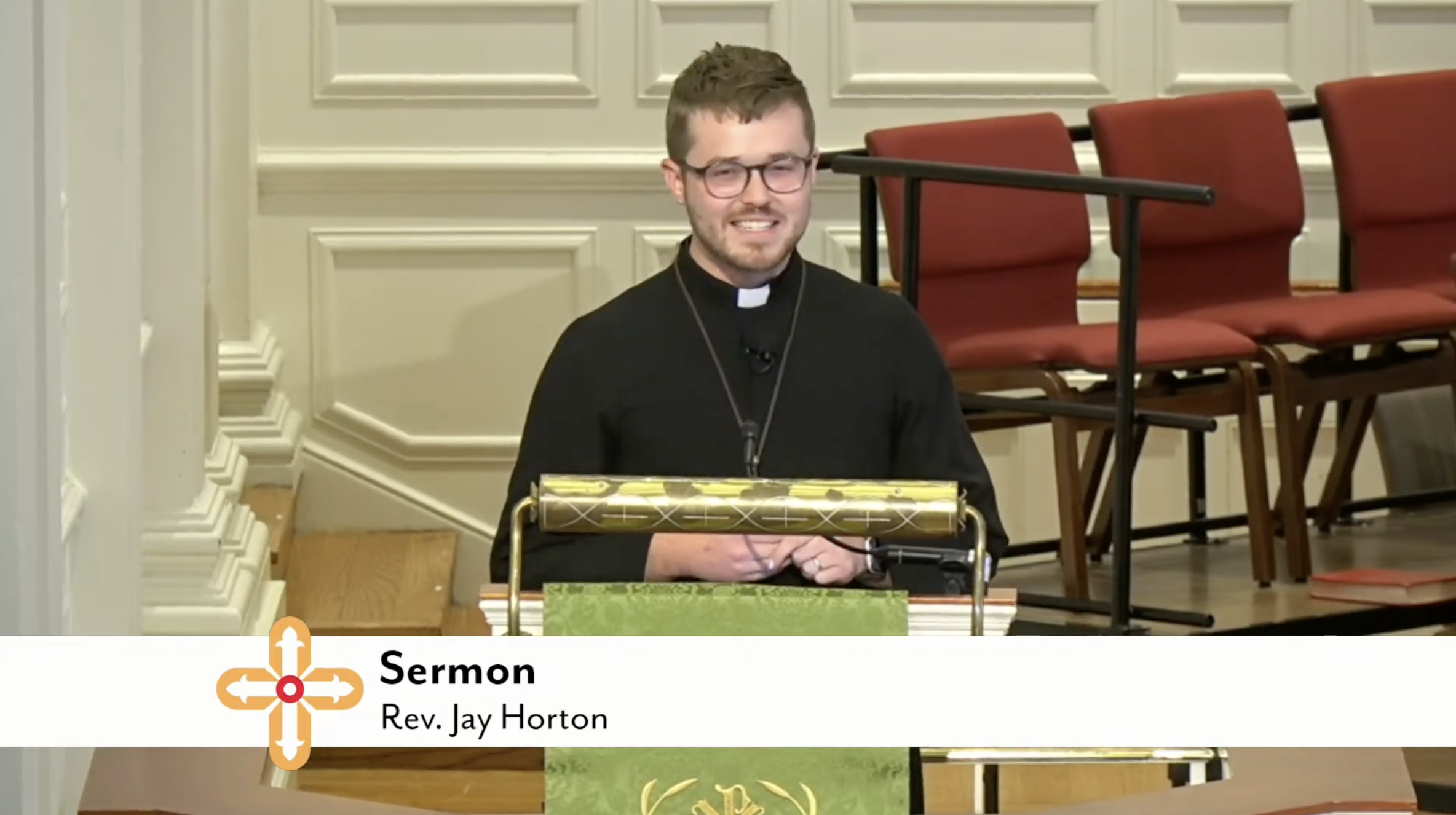
Written and delivered by Rev. Jay Horton at Glenn Memorial United Methodist Church in Atlanta, Georgia, on August, 2026.
Scripture Reading – John 15:1-8 (NRSVue)
1 “I am the true vine, and my Father is the gardener. 2 He cuts off every branch in me that bears no fruit, while every branch that does bear fruit he prunes so that it will be even more fruitful. 3 You are already clean because of the word I have spoken to you. 4 Remain in me, as I also remain in you. No branch can bear fruit by itself; it must remain in the vine. Neither can you bear fruit unless you remain in me. 5 “I am the vine; you are the branches. If you remain in me and I in you, you will bear much fruit; apart from me you can do nothing. 6 If you do not remain in me, you are like a branch that is thrown away and withers; such branches are picked up, thrown into the fire and burned. 7 If you remain in me and my words remain in you, ask whatever you wish, and it will be done for you. 8 This is to my Father’s glory, that you bear much fruit, showing yourselves to be my disciples.
As Miranda Lambert famously sings, “Jesus, he drank wine, and I bet we'd get along just fine.”
Now, I know not everyone partakes for their own reasons, and this sermon is in no way a promotion for the wine industry, but have you ever noticed how often Jesus uses grapes and vineyards to get his points across?
There was his first miracle at the wedding at Cana — you know the one — where he turns water into wine. There’s then the parable of the new wine in old wineskins about the expanding kingdom of God. In the Gospel of Matthew, Jesus tells of laborers hired into the vineyard, and of two sons invited to go work in the vineyard. In all three synoptic Gospels — Matthew, Mark, and Luke — he tells the parable of the wicked tenants in the vineyard. And then, last of all, in the Fourth Gospel, we get this: "I am the true vine, and my Father is the gardener."
Now, there are a lot of reasons Jesus and the Gospel writers may have given us so many stories about wine and vineyards. And no, I don't believe it's because they were all lushes. Again, the alcohol is not the point.
It's because this is what people knew. It was relatable. Cultural. Communal.
And more than that — the longer I spend in wine country, learning from vineyard managers and winemakers myself, the more I understand that so much goes into growing good grapes and making good juice that the teaching opportunities are simply abundant.
Plants and nature can be some of our best educators. We just have to listen to God’s Creation.
That could not have been more apparent to me than last week.
I was in Oregon, in the Willamette Valley, on vacation with my family — and, I confess, working on this sermon. It's prime country for Pinot wines.
One morning we spent walking the rows with a winemaker at Rain Dance Vineyards, one of my favorite family farms. In addition to grapes, they have eighty adorable llamas. But that's for a different sermon.
The winemaker told us about all that goes into growing grapes for their best wines. He started millennia back. The vineyard you see pictured on the front of your bulletin was once a sandy beach with shallow water, and it left behind a sediment that turns out to be perfect for growing grapes.
As the vines climb the hill, the soil changes, and the fruit changes with it. He told us their vines are grafted onto American rootstock to resist disease. That they're head-trained and cane-pruned. That's the part I found most fascinating. It means that every season after harvest, they cut everything back. Everything. They keep one branch — the best one — and lay it along the bottom of the trellis. And that single cane becomes next season's growth.
I noticed how clean the rows looked, and I asked how often the workers walk them. "Regularly," he said. A good winemaker is out in the vineyard with his teams daily and weekly, because the vines want to grow up and out, straying from the central vine. And if you let that happen, all the plant's energy goes into new shoots instead of grapes. And good fruit for good wine is the goal.
I think that is exactly what Jesus is talking about in the Fourth Gospel.
Friends, do you ever feel like a wild vine shoot, pulled up and out, running this way and that? Soccer practice Tuesday, band rehearsal Thursday, a work meeting that runs long, a grocery run that turns into three stops because you can’t find the ingredients you need for that night's supper. Oh is that just me?
You get to Sunday, exhausted and worn out, and you can’t even name one thing you actually accomplished. Your brain is just that frazzled.
We see this in the church, too, don’t we? Let’s start this new ministry, or join this great project, or copy that program working at this other church down the road. We get taken by the allure of growth — more is better — more space for activities, more money for ministry, more people in the seats. Growth that is quick and convenient. Shiny and green.
We live in a wild world as well. Bosses and Big Tech, politicians, presidents, and pundits all pointing in different directions. Look here, look there, pay attention to this and that. It's all urgent. And what they're mostly saying is grow, grow, grow, at all costs.
Well, don’t be fooled. These are misdirections — runners off the central vine. They’re fast and green; they spread and climb, but ultimately will bear no fruit.
I hate to tell you, friends, but today’s scripture reminds us:
Not all growth is good growth.
The vinedressers know this. It's why they walk the rows all season long, cutting the shoots that run up past the trellis, because those flyaways steal energy from the fruit.
Jesus does not say the branches do the pruning, though. My Father is the gardener. Gardener. Vinedresser. Vinegrower. Different translations, same job — the one who holds the clippers. And it isn't us.
So the question this morning isn't what we think ought to be cut out of the world. It's what God is trying to cut out of us. But we are not bystanders either in a world addicted to growth.
Look at the data centers rising across our state and country. The one proposed in Effingham County by OpenAI alone will draw 3.2 gigawatts of energy — roughly everything Plant Bowen, a coal plant in Cartersville, can generate. An entire power plant, for a single data center.
And here's what I can't preach my way around:
They're building it because we asked for it. The addiction to convenience is ours. The appetite for more is ours. Somebody's land, somebody's air, somebody's water will carry the cost of a want that is partially all of ours.
That is what unpruned growth looks like at scale.
Ask any grower of grapes, and they'll tell you the best bunches are close in. Near the center trunk, where the sap has the shortest distance to travel. All the energy is focused on the fruit.
Life will tempt us to do twelve, twenty, or two hundred things. To chase work and wealth and more. But Jesus asks one for only one thing: abide in me. Stay close to the true vine, follow the Gospel, and let the Father tend what needs tending — so that you bear fruit that will last.
Which brings me home. To us at Glenn.
We are embarking on a visioning process here, and the whole church has been invited into it. And I have to tell you I have loved the way it began, and the way it continues — in prayer. Not with a whiteboard or sticky notes scattered across a room, although we may get there, but on our knees.
Because here is what I’ve learned from reading scripture and spending time in vineyards.
When a winemaker prunes, they do not walk the rows asking, “How much can we keep?” They ask one question: “Where is the best fruit coming from?”
And then they regularly cut back everything else. And that is what finding vision is all about—not adding. Choosing. Choosing God over and over and over again, and asking God where the best fruit will be born and focusing energy on that mission and ministry.
Test everything against God's holy word and God's will. Keep the spiritual disciplines that hold you close to the vine: prayer, scripture, worship, the table, one another. And let the vinedresser do what only a farmer can do — make the best fruit for the best juice.
Jesus began his ministry at a wedding in Cana, with water made wine. He spent his last night before death at a table with a cup in his hand, this is my blood poured out for you and for many. And in between, he keeps walking us out among the vines, saying stay close me. Stay close me. Stay close me and I’ll take care of you.
Jesus, he drank wine. And I bet we'd get along just fine — if we would only abide him long enough to become something worth pouring.
In the name of the Creator, the Christ, and the Holy Spirit. Amen.