Protecting Blake Plateau
Written by Beth Remmes, GIPL Coastal Outreach and Resiliency Coordinator.
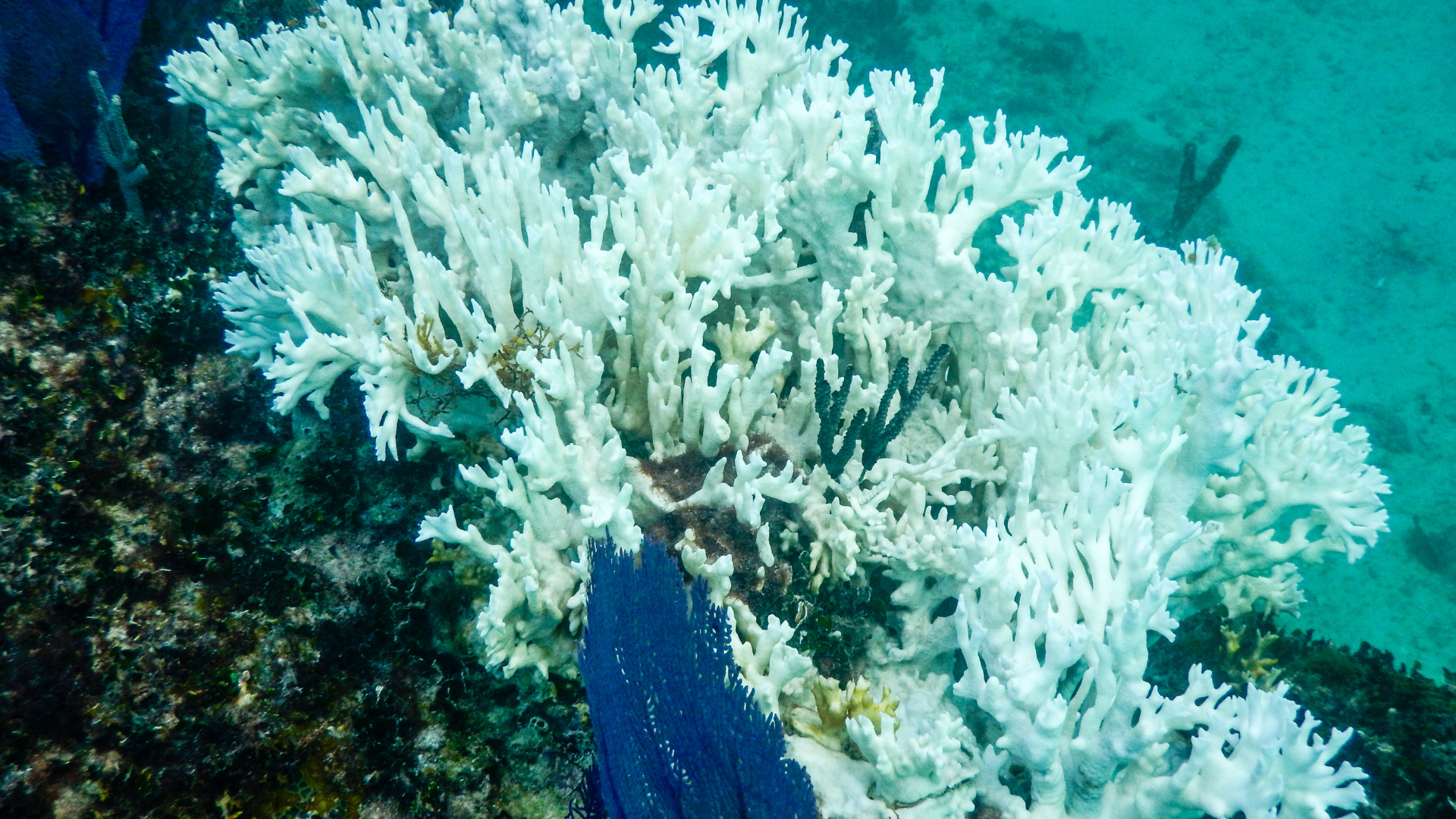
In honor of World Reef Awareness Day on June 1, Chatham County recently passed a proclamation affirming its commitment to stewarding its coastal and ocean environment. The proclamation specifically recognizes the Blake Plateau, the world’s largest deep-sea coral habitat, located off the shores of the Carolinas, Georgia, and Florida. Earlier this year, the Sanctuary Advisory Council (SAC) for Gray’s Reef National Marine Sanctuary also voted to recommend evaluating expanded protections for deep-water coral ecosystems in the Blake Plateau during the sanctuary’s upcoming management plan review. Together, these actions signal a growing movement to conserve one of the most remarkable ecosystems on earth.
The Blake Plateau contains an expansive network of Lophelia coral neighborhoods. Based on their size and structure, scientists estimate these reefs may be between 300,000 and two million years old and support nearly 100 species of fish, demonstrating the power of community. Working in concert with the Gulf Stream, deep-sea corals help transform the remains of marine life into nutrients and transport them back toward the surface, supporting biodiversity far beyond their immediate surroundings.
As someone who has studied biomimicry and sought to learn from nature’s patterns, I am continually struck by what ecosystems like the Blake Plateau reveal about resilience. They illustrate that the most enduring systems are built from the bottom up and develop through cooperation and adaptation.
These are lessons environmental advocates know well, and faith communities are learning, especially in moments when hard-won progress can feel fragile or reversible.
The Blake Plateau depends on slow growth over millennia, with coral skeletons forming a stable foundation upon which new life builds. That process offers a powerful metaphor for conservation work.
Faith leaders like Rev. Ben Chavis and Rev. Willie Ramey in rural Warren County, North Carolina, fought toxic dumping in the 1980s. Here in 2026, we are still building upon that foundation and participating in a movement with spiritual communities speaking up on behalf of our shared sacred home.
Progress is often incremental. Decisions are made without certainty of outcome. Each step rests on decades of research, advocacy, and care offered by people who may never live to see the full results of their efforts.
Despite its deliberateness, what grows slowly is also vulnerable. Deep-sea coral ecosystems face increasing pressure from industrial activity and resource extraction, especially in places where protections are limited or absent. What remains out of sight is often treated as expendable, even when it plays a critical role in sustaining ocean life.
That is why moments like this matter. Chatham County’s Proclamation and the SAC’s recommendation do not guarantee expanded protections, but they add Georgia’s voice to a growing chorus of stewardship. The conversations now underway have the potential to deepen public understanding of the interconnectedness and vulnerability of these ecosystems. They also invite us to reflect on our own role within a shared system, where care, patience, and foresight determine whether something ancient is preserved or lost.
Protecting places like the Blake Plateau asks us to think beyond immediacy and profit and to act with faith on behalf of future generations.
Like deep-sea coral ecosystems, meaningful stewardship is built slowly, collectively, and creates the conditions for life to flourish.
To help protect this sacred place, sign GIPL’s petition to advocate for permanent protections within the Blake Plateau.