This Juneteenth, Freedom Still Stops at the Meter Box
Written by Marqus Cole, GIPL Organizing Director
As this Juneteenth approaches, the word “freedom” will echo across the United States at cookouts and celebrations. Juneteenth has always sat at the crossroads of faith, hope, and lament — a declaration of freedom and emancipation shadowed by the recognition that delay means freedom’s uneven reach.
It’s a celebratory note that can ring hollower and hollower with each passing year.
You’re likely familiar with the racist institutions (especially here in the South) that denied Black Americans rights long after the Emancipation Proclamation was signed. Not unlike Jim Crow segregation and redlined communities after it, another system continues to overburden Black Southerners today: our energy system.
For many Black and brown communities, especially in the South, freedom is stifled on a daily basis at the meter box. Shackled by rising power bills, families are forced to choose between food, medication, or keeping their home a livable temperature.
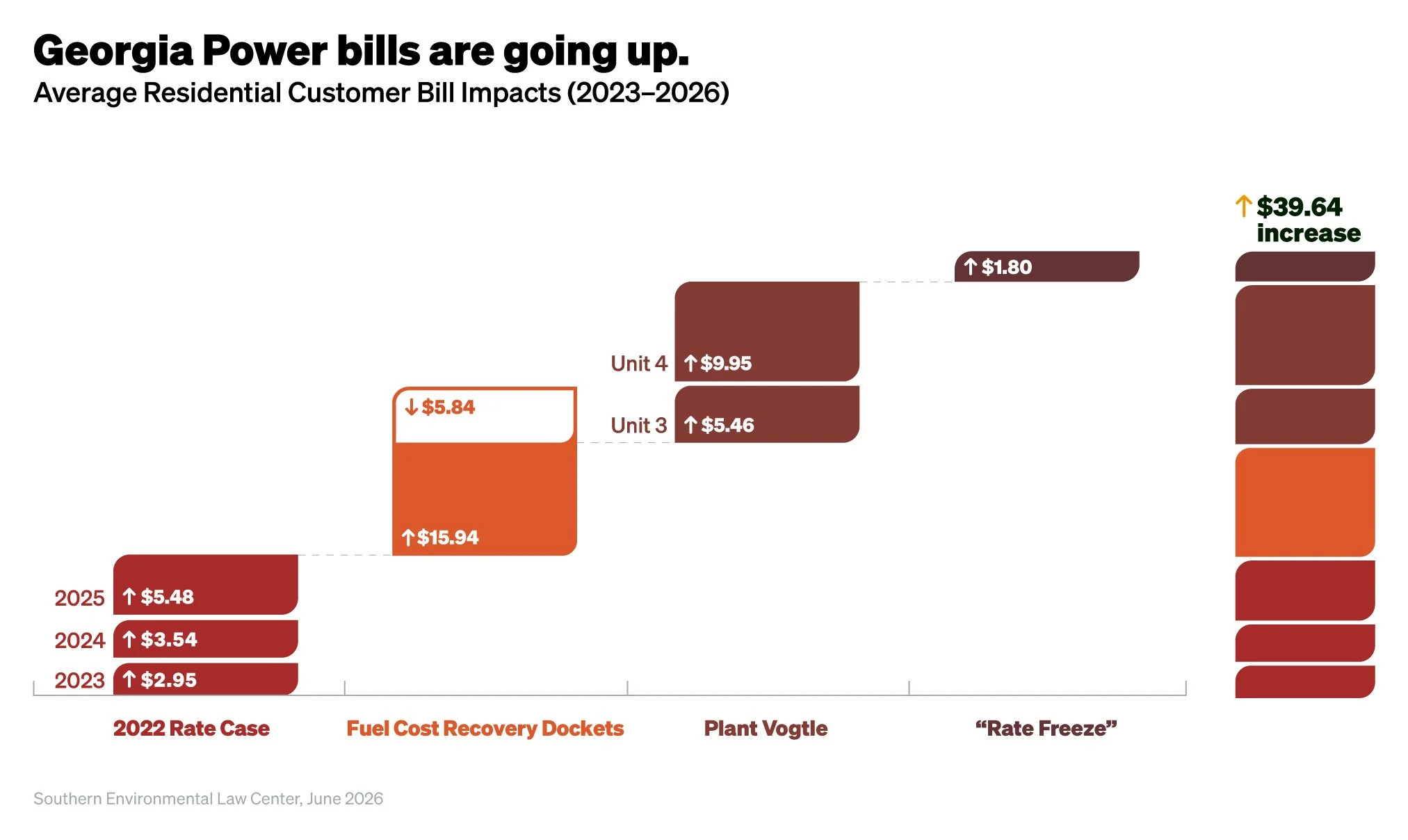
Across the country data centers and rising energy costs are making headlines as an “affordability” crisis. This is especially true in Southern states like Georgia, where according to the Pew Research Center more than 140 new data centers are planned in the coming months and energy bills have increased for average residential customers by over $500 a year in the last three years.
To support the increased energy demand from data centers and other large load customers, Georgia Power and its parent, Southern Company, are greatly expanding methane gas infrastructure (called "natural" by the industry). This is especially notable in the plan by Southern Natural Gas, jointly owned by Southern Company and Kinder Morgan, to add 300 miles of new methane gas pipeline (the South System Expansion 4 or SSE4) across Georgia, Alabama, and Mississippi. The pipeline and its sibling, Tennessee Gas Pipeline Company’s Mississippi Crossing (owned by Kinder Morgan) would cross more than 2,000 bodies of water.
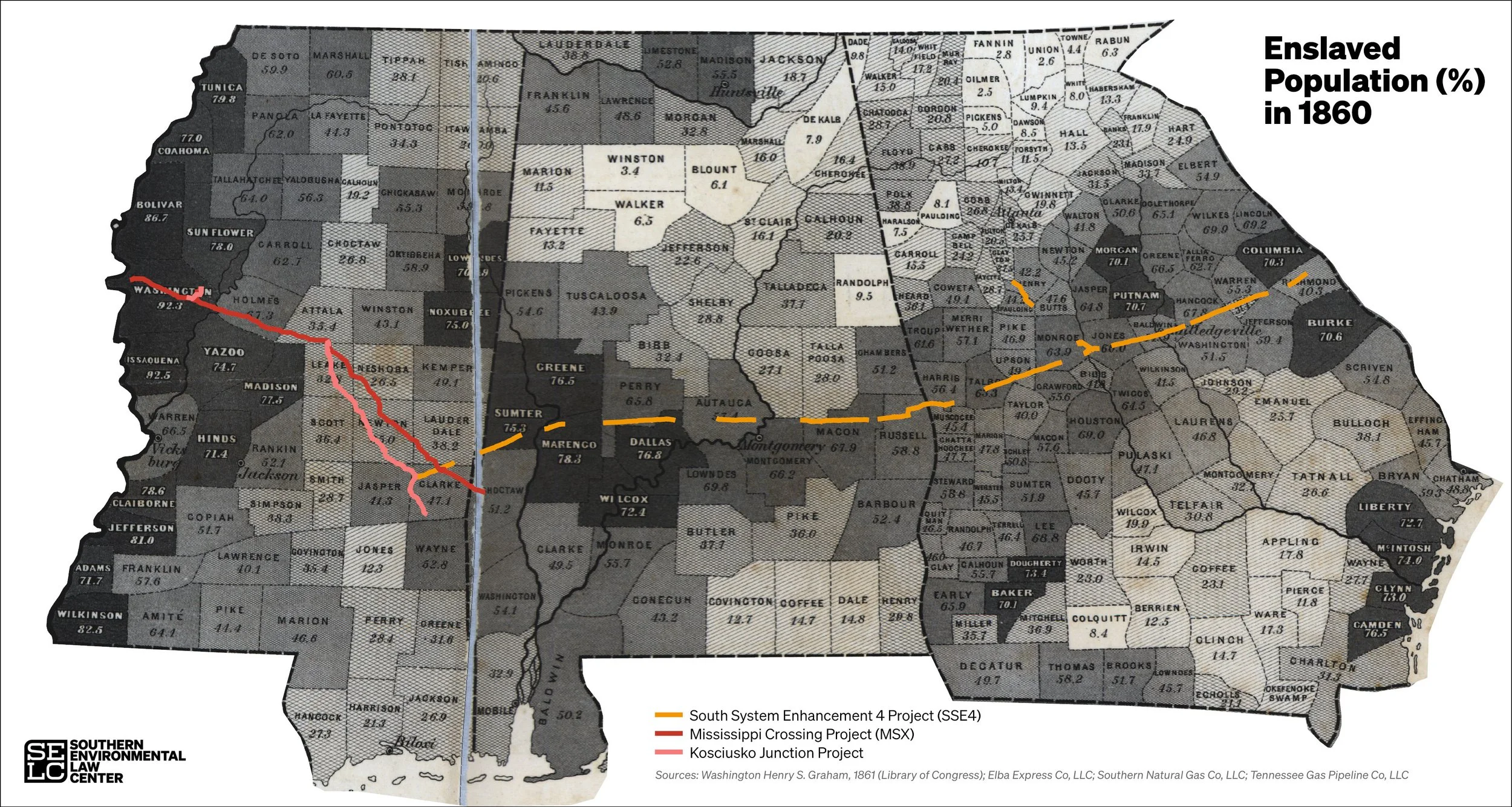
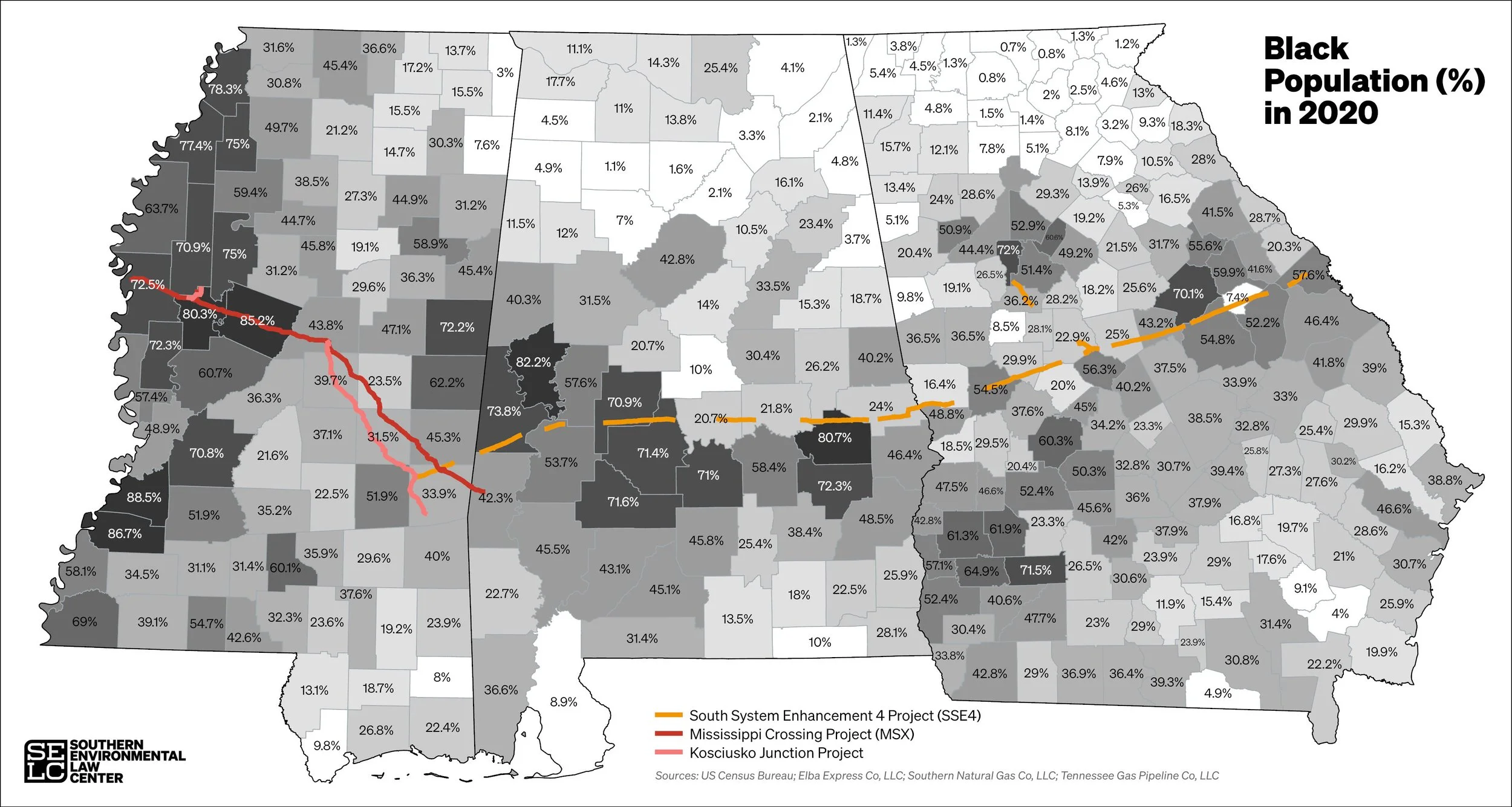
Trace the proposed route of the SSE4 pipeline, and an uncomfortable pattern emerges. The corridor overlaps significantly with the historic Black Belt, following a geography shaped by slavery, Reconstruction, and generations of Black and brown land ownership.
Like “King Cotton” of yesteryear, pipeline projects like SSE4 will expose marginalized communities to real costs and risks for the sake of profit that those same communities may never see. Communities near pipeline compressor stations face increased air pollution linked to higher rates of asthma, cancer, and heart attacks, as well as safety risks from gas leaks or explosions. Land disturbances caused by pipeline construction threaten water quality and wildlife.
Ordinary households are disproportionately shouldering billions of dollars in new gas pipelines, power plants and transmission lines to bring more data centers to the South, enriching monopoly utilities like Southern Company. Because of racism’s enduring legacy here in the South, Black families are also more likely to pay a larger share of their income towards their power bill.
More than an affordability crisis, what we have is a freedom crisis — one that echoes what we faced collectively generations ago in the same region when it came to tobacco, sugar, and cotton.
Take Macon-Bibb County, for example, historic home to Jefferson Franklin Long, Georgia’s first African American Congressman. An active member of the African Methodist Episcopal (AME) church and a former slave, Long and his community took collective political action seeking better living conditions, particularly for tenant farmers and sharecroppers along the Black Belt. Generations later, those same communities continue to press for freedom and better living conditions, often with literal if not spiritual descendants.
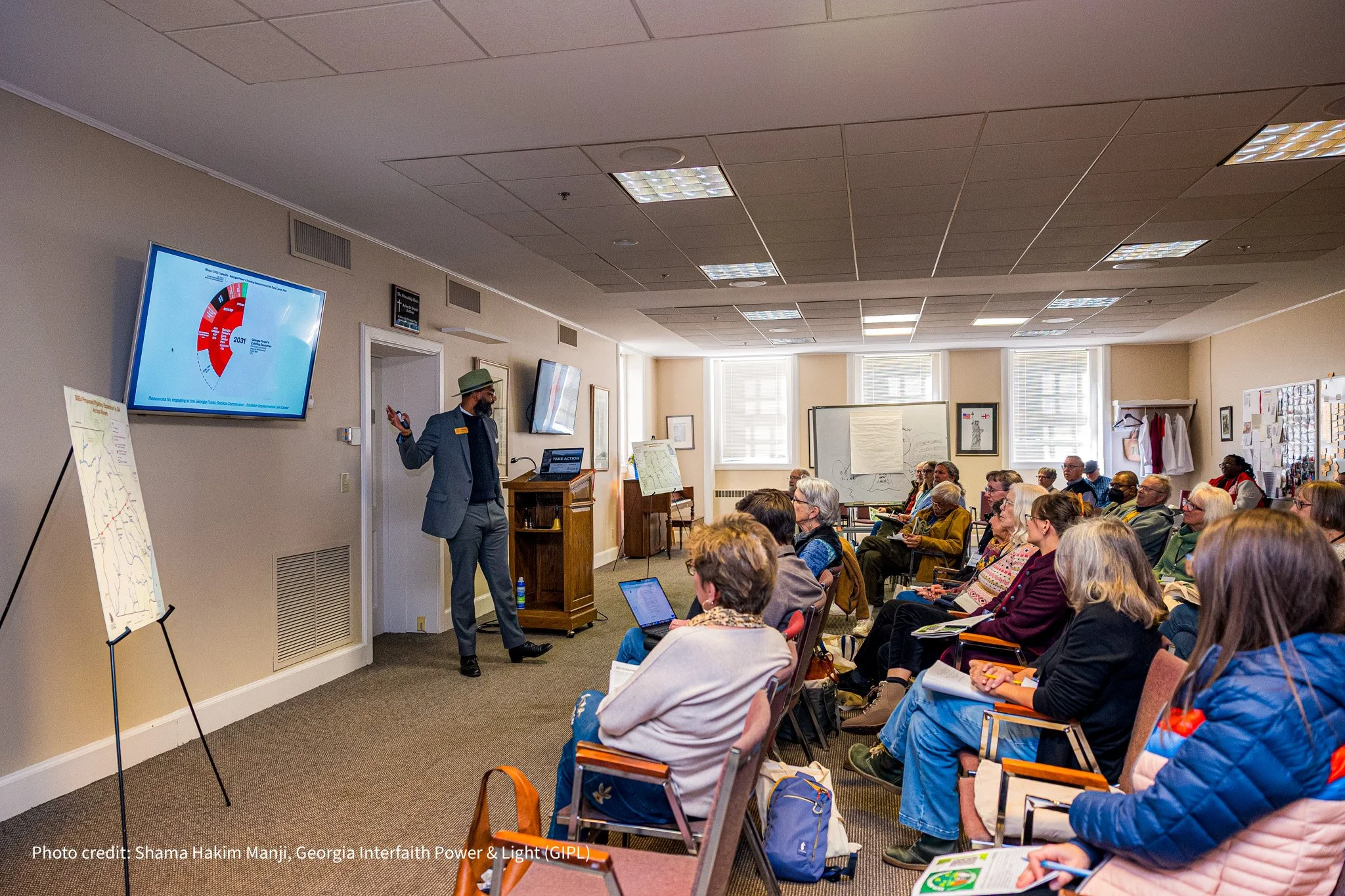
Recently, as Organizing Director at Georgia Interfaith Power & Light, my team and I led a tailgate against the pipeline in Macon, bringing over 50 people to give public comment and witness to the Federal Energy Regulatory Commission (FERC) regarding the undesirable impacts of the SSE4 pipeline proposal. Working alongside scientists and joining with environmentalists, folks of faith came out to say that if the cost of fossil fuels requires bondage and oppression of some, then the cost is too high for all.
Yet, as foreboding as this future may seem, there is still hope.
A recent report from London Economics International casts serious doubt on the need for SSE4 and Mississippi Crossing in the Southeast. The report indicates that speculative large load growth from data centers used to justify the pipeline expansions is overstated. Furthermore, existing and alternative capacity options like solar are not being fully considered.
Currently, before the Federal Energy Regulatory Commission (FERC), the SSE4 route raises an uncomfortable question about whose communities continue to bear the costs of infrastructure decisions. While neighborhoods along the pipeline's path will endure the most immediate harms, this is a global issue. Each new pipeline is a decades-long commitment to gas we cannot afford, as climate-warming effects don’t stop at the fenceline. The SSE4 pipeline and fossil fuel decisions being made make plain what champions of justice have always known: freedom isn’t about “us or them.” It is all of us, or none of us.
As a child celebrating Juneteenth, I recall my parents and grandparents reminding my cousins and me of the words of Fannie Lou Hamer, “Nobody’s free until everybody's free.”
Juneteenth commemorates a real moment in our shared history when freedom arrived years after it had been promised. The lesson is not simply historical, but practical: freedom isn’t measured only by what the law declares, but by who bears the burdens of economic progress and who enjoys the rewards.
As the Southeast builds the energy and information infrastructure to power an artificial-intelligence economy, that question remains unsettled. The geography may be familiar, but the choices ahead for all of us do not have to be.