No One Is Coming to Save Us, But We Will Save Each Other
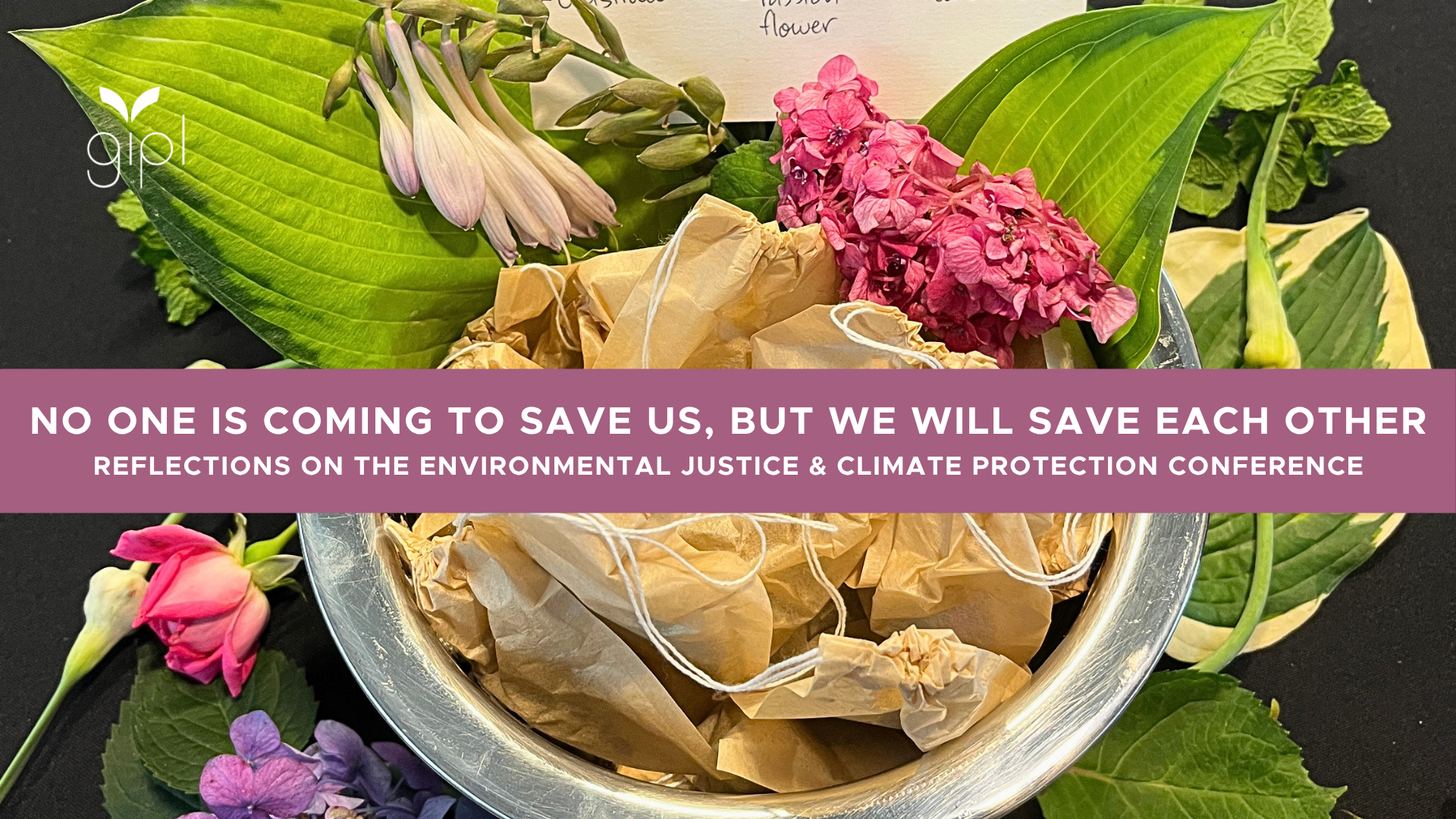
A “grief tea” prepared for attendees of the conference by Danielle Jones of ROOTSRISE LLC. Photo by Sam Warner.
Written by Sam Warner, GIPL Communications Associate.
Reflections on the Environmental Justice & Climate Protection Conference
Last week, I and several other GIPL personnel had the opportunity to attend Science For Georgia’s fifth annual Environmental Justice and Climate Protection Conference at Georgia Tech. It was an enlightening two days.
If I could describe the conference in two words, it would be somber and hopeful. There was a keen awareness of how bleak our current political climate can feel for those passionate about environmental justice, but also an appreciation for the strength and resilience of our communities.
“I want to be optimistic, but my conscience won’t allow it,” said Daniel Blackman, the keynote speaker for the conference.
Blackman is a global leader in climate equity and a former Presidential Appointee under the Biden–Harris Administration. He spoke from firsthand experience as he described the devastation of government environmental organizing during the regime change of January, 2025.
“Over three years of work was unraveled over two days and about 90 executive orders,” Blackman recalled. “The best thing this administration has done is show us who is with us and who is against us.”
This theme came up again and again throughout the conference. People are increasingly aware that the federal and state governments are not going to deliver a solution to the climate crisis any time soon. They are increasingly frustrated with corporate interests that seem to prioritize profit over human health and safety. They are beginning to suspect that if help is to come, it will come from everyday citizens stepping forward to take action.
None of this is to say that the future is hopeless. Several conference sessions spotlighted the victories won and progress made by small, hyperlocal grassroots organizations throughout the state.
One of these victories is the Athens 100% Clean and Renewable Energy Plan. This commitment for Athens-Clarke County to be powered by 100% clean energy by 2050 grew out of the efforts of 100% Athens, a grassroots organization led by everyday residents of the county.
GIPL’s South Georgia Organizer Tykivious Grier presented on the unique challenges and strengths of our South Georgia communities. Ty’s talk explored how we can build lasting environmental and community change in places where trust must come before action. He highlighted the importance of moving people from isolation into relationship before asking them to take action for our cause. GIPL’s work with faith communities in South Georgia is just one example of how relationships can be a catalyst for change. (For more information about how faith communities can create change, visit our Green Team page.)
Private citizens are also stepping forward to hold corporations accountable to the communities they impact. Laura Early of South Wings shared how their organization uses a network of volunteer pilots to capture aerial footage of the environment. A recent flight captured photo evidence that a data center in Tennessee was using far more power than they were permitted for, showing that they had violated their contract.
While coming together in committees and coalitions is vital, individuals are also taking steps to make a difference. As Brandy Hall of Shades of Green Permaculture shared in her presentation, a growing number of business owners and private homeowners are taking steps to heal the water cycle and rewild the land around their businesses and homes. (For more information about rewilding efforts, check out GIPL’s ReWilding program.)
“Every scale matters,” Hall said.
Private citizens are also coming forward to keep the fight alive through art, poetry, and music. After all, man cannot live on activism alone.
“There’s healing in the soil, but there’s also healing in music,” Blackman said in his keynote speech.
He emphasized the importance of making the work feel fun, exciting, and healing, a sentiment which was repeated by several other presenters throughout the conference.
Ryan Jones of Black Empowerment for Environmental Sustainability (BEES) illustrated the importance of art in his session by providing a platform for Black poets, comedians, and musicians to share their work. I was struck by how this session brought the climate conversation down from the realm of data and policy and into the body, allowing those present to feel through their grief, determination, and hope. There really is healing in music.
And finally, private citizens are bringing healing to their communities. They come bringing heart medicine to save us from burnout and overwhelm. They come bringing a place for our grief to be held and maybe even transformed.
I had the privilege of ending the conference with Danielle Jones of ROOTSRISE LLC, who led an earth-based, somatics-informed session on holding space for climate grief. In this final session, I sank into my body, expressed my grief through movement, and shared my experiences with others. It was a much needed moment of grounding after a very intense two days.
Despite the rising challenges, the Environmental Justice and Climate Protection conference left me feeling hopeful for the years ahead. I have faith in our communities and their ability to mobilize for change. I have faith in our support networks and our ability to hold each other up. I have faith in individuals and in our ability to take meaningful action, both alone and together.