You did it to them, you did it to me!
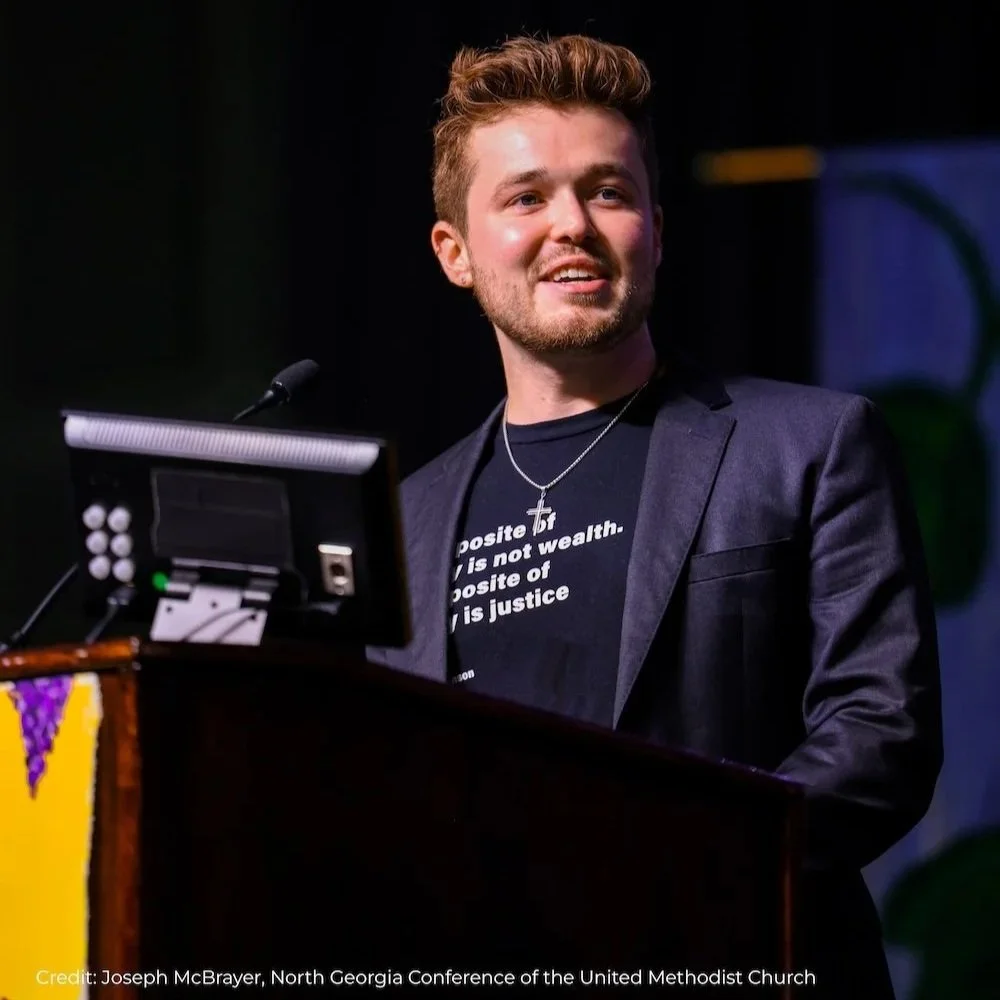
Devotion written and delivered by Rev. Jay Horton on Thursday, June 18, 2026, at the North Georgia Annual Conference of the United Methodist Church in Athens, Georgia.
As has been mentioned, our scripture and theme for this conference is Matthew 25:40: “The king will answer them, ‘Truly I tell you, just as you did it to one of the least of these brothers and sisters of mine [siblings of mine] you did it to me.’”
“Just as you did it to them… you did it to me.”
I first started really thinking about this scripture and what I would say this morning, a couple of months ago, when we were in a severe drought here in Georgia. If you didn’t have a yard or water a garden, you may or may not have noticed, but there wasn’t enough water in our state. It’s part of the reason we had these wildfires popping up.
And I was in Rome, Georgia, one weekend during this time for a wedding, and the drought was really apparent to me there, probably because I grew up there and remember the waters regularly overflowing banks in childhood.
Rome, for those that don’t know, is a city of rivers, and a lot of activity happens around the rivers. Three rivers, to be exact. The Etowah, the Oostanaula, and the Coosa.
Each of these three rivers have their own distinct personality, and they flow seamlessly together meeting at the center of downtown Rome. But I was standing there at the intersection, seeing them almost at the bottom of their basins, I couldn’t help but think about this scripture and the work before the church today.
You see, we often, in this passage and in life, focus on the acts of mercy themselves — extending provision to the hungry, the thirsty, the stranger, the naked, the sick, and the imprisoned. Giving them food, water, welcome, clothing, medicine, and companionship, right!? Hey, we build whole missional structures around this work — food pantries, care teams, and clothing closets. And friends, it’s holy work.
But what we frequently forget is that it's not all the work, and that God calls us to something deeper — ministries of justice as well. King Jesus tells us very plainly in this scripture that what we do to one neighbor, we do to every neighbor, and we do to God.
You do it to them… you do it to me! We are all interconnected.
And if that’s true, then we must as a church stop thinking about our actions as only in the here and now — the moment of mercy. You see, feeding ministries are good, and right and holy. I said this before.
But if we are truly bound up with one another in God, then love compels us further: to ask not only who is hungry today but why they were hungry to begin with. To ask not only who is thirsty right now, but why they do not have clean drinking water in this world.
The rivers in Rome still had their shape, even with less water flowing. The twist and the turns and the banks were there, but without much water, little was being nourished. And friends, I wonder if the same can be true for us and our churches.
We can keep the shape of mercy. We can maintain the well-worn banks of our food pantries and clothing closets, and walk the familiar paths with our care teams, structures built faithfully by generations and places that held real, life-giving water at one time. We can keep showing up and keep doing the holy work. And still find ourselves looking around and wondering why so little seems to be changing. Why the pantry lines keep getting longer. Why the same familiar families keep coming back for more.
The shape alone is not a river, friends. The banks of mercy need deeper waters of justice flowing through them for life to be sustained and nourished.
And this is the hard work, church. Those deeper waters are often found in those questions we are afraid, or unwilling, to ask. Why is this neighbor hungry? Why is this community thirsty or imprisoned? Why does this family keep ending up on this doorstep, or border, generation after generation?
If I’m honest, I haven’t always asked these questions myself. For a long time, I thought my job and the call was to meet the need in front of me and trust that someone, somewhere, was tending to the deeper waters? Well God has a way of putting us in places where we cannot look away, right.
For me, that place was Atlanta First United Methodist Church.
It was there when I was working in community engagement that I first began to think less about my individual actions and more about the system. You see, day after day and week after week, the same individuals would come to me with the same needs — the very needs Jesus names in Matthew 25. Food. Water. Clothing. Shelter. Healing. Companionship. And as a church, we could address those needs in the moment. We could send someone home fed, or clothed, or with their light bill paid. But they would be back again the next week. And the week after. And the week after that.
People could not pay their utility bills because their utility bills kept going up, and they were on fixed incomes. People needed bottles and bottles of water because for a “city of trees” somehow there is not enough shade in Downtown Atlanta to prevent the summer heat from killing our most vulnerable. People came in malnourished and craving fresh vegetables — and I started asking where the grocery stores were. Where the community gardens were. Why entire neighborhoods have been left as food deserts while others have Whole Foods and Publix on every corner.
The needs were real. Our work of mercy was holy. But the river kept running dry.
As I zoomed out and started tracing the through lines, between the hungry person and the lack of fresh produce, the thirsty person and the missing tree canopy, between the sick person and the power plant or data center down the road — it was then that I felt God’s call to environmental justice work.
I began to see that our reliance on fossil fuels over clean energy and continued urbanization and industrialization — economic growth at all costs — even at the expense of clean water and our Common Home, was not separate from Matthew 25.
It is Matthew 25.
As it says in our social principles humankind has for too long “treated the rest of the created world as if it were disposable and allowed the destruction of other living organisms and their natural habitats to go unchecked. Further, the experiences and voices of people most at risk have largely been ignored.”
God’s creation and how we care for it is the deeper waters running underneath every act of mercy we offer.
Seeing this, I joined the team at Georgia Interfaith Power & Light (GIPL), a nonprofit that is helping congregations across our beautiful state organize, implement practical climate solutions, and advocate on issues related to climate change, environmental justice, and community resilience.
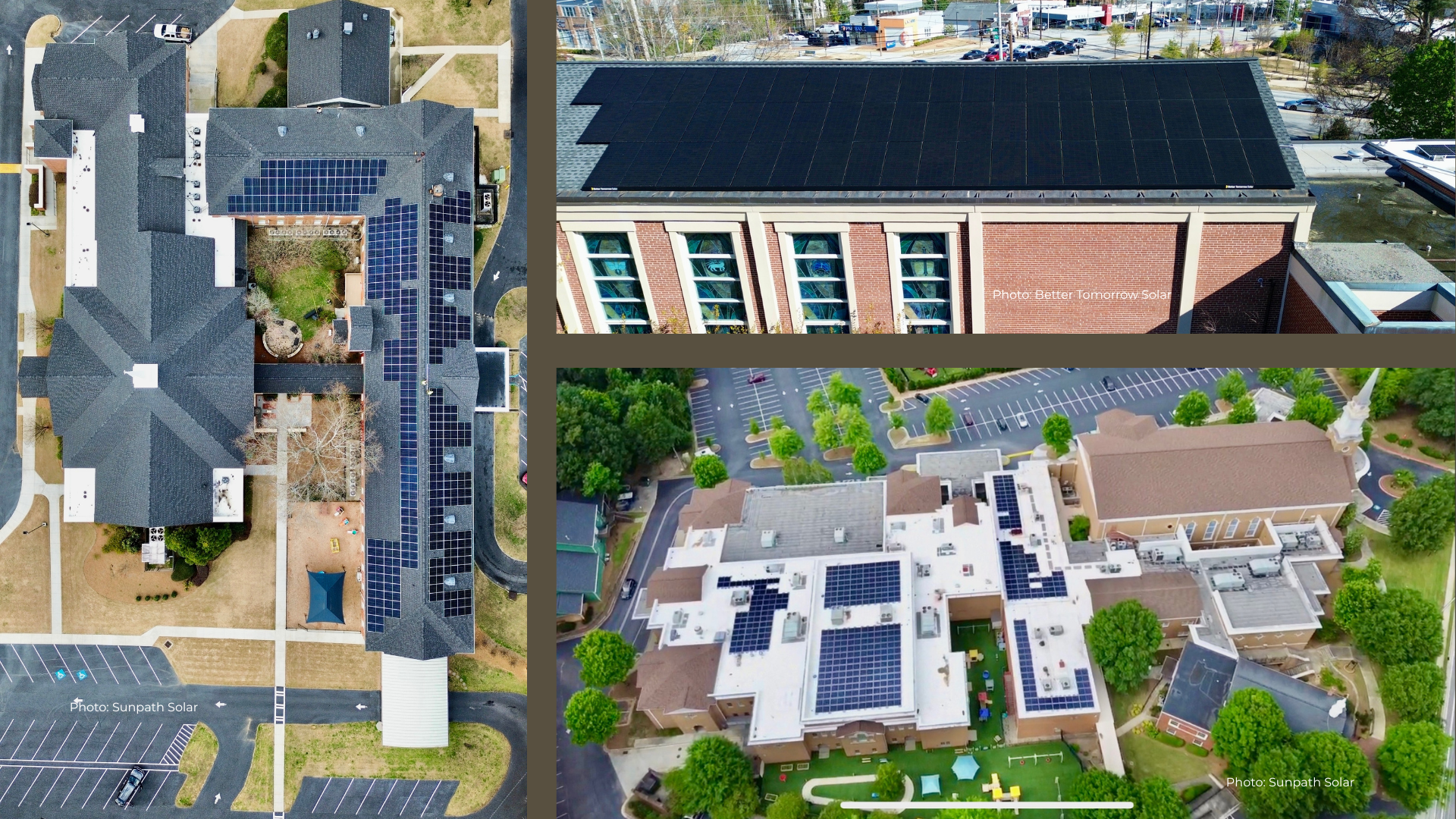
And we’ve been able to help congregations like Dunwoody UMC, Chamblee First UMC, North Decatur UMC, and Neighborhood Church install solar, not only reducing their energy bills so they can invest more in the mission and ministry, transforming lives in front of them, but so they can also help reduce the long-term effects of air pollution and climate change, killing hundreds every years.
In total, just these UMC congregations have removed the equivalent of approximately 1,500 gas cars off the road annually.
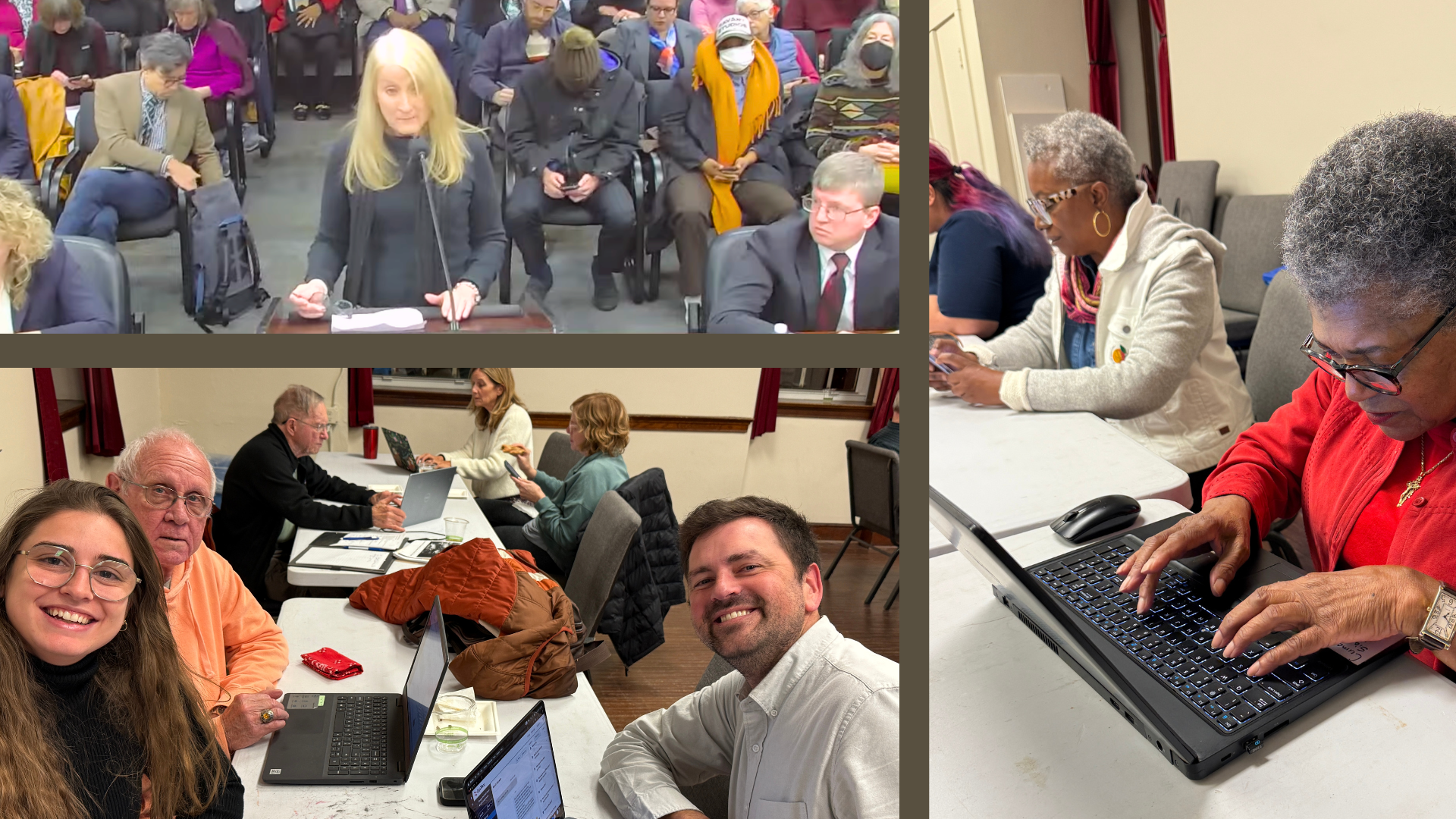
Other congregations, where solar is less feasible, have taken on advocacy work, including Glenn Memorial UMC, Embry Hills UMC, Central UMC, and Oconee Street UMC, text banking, showing up at the state legislature and Public Service Commission hearings.
And while the wins can often feel infrequent, since 2024 this sustained pressure from faith leaders has actually forced Georgia Power to expand its bill relief programs for vulnerable populations. And where previously, they were enrolling on average 3,000 seniors a year to their EASE power-discount program, since that time they have enrolled more 61,000.
That’s greater than 27,000 more people a year who can keep their lights on because of this work and people like Gayle Chimo at Oconee Street and Carol Tucker-Burden at Central and Dr. Jordan Thrasher at Embry Hills, and so many more.
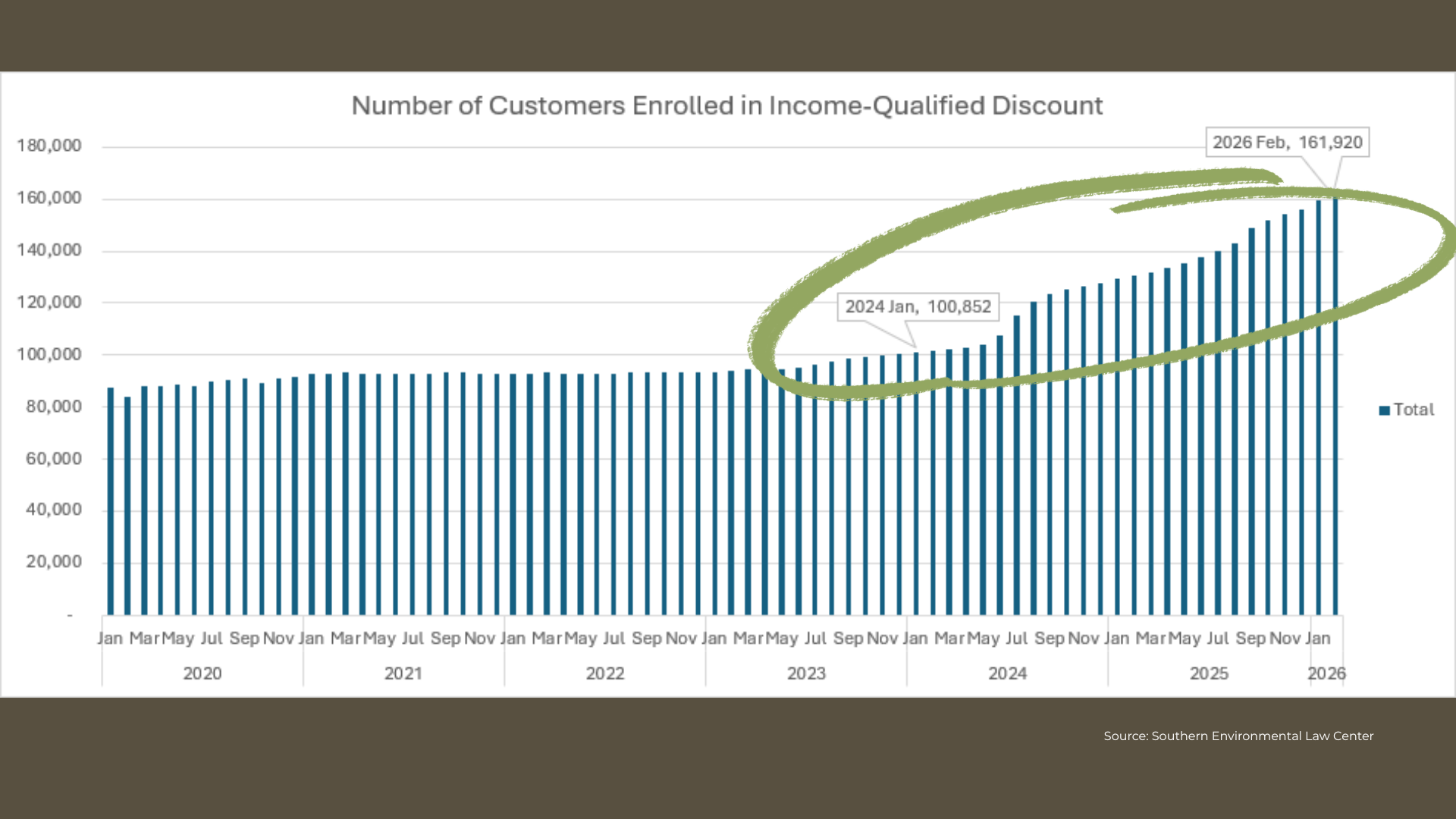
When we stop ONLY looking at the immediate needs of OUR neighbors or OUR church or even OUR conference and instead look upstream and downstream, and see a more holistic approach to mission and ministry — acts of mercy plus works of justice — we will begin living more fully into the calling of Christ in Matthew 25.
You do it to them… you do it to me!
We are all intertwined in this web of life. North Georgia. South Georgia. Alabama and the Ivory Coast. The Philippines and Norway. All of us.
To quote Dr. King from his Letter from a Birmingham Jail: "We are caught in an inescapable network of mutuality, tied together into a single garment of destiny. Whatever affects one directly affects all indirectly"
And it’s time to live into this, our mission and our call.
Let Justice Grow.
Let us pray:
Most holy God, you formed us in your image, breathed into us the breath of life, and charged us in your first command in Genesis, to love and tend the garden — to take care of the world and let it flourish. We lament how far at times we’ve strayed from that call and ask for your forgiveness. Give us eyes to see past our day-to-day, our immediate needs, and embrace the workings of your Holy Spirit in this world. Give us and those we serve daily bread, and then encourage us to ask what is preventing ALL from having the bread of life every day. Help us see how we are all interconnected, to each other and all Creation. Guide us as we wade into the deeper waters of justice, resisting evil and oppression in its many forms and relinquishing fear for the sake of the Gospel. We are one in you and one in ministry to all the world. Together, may the world be transformed. We pray all of this in the name of the Creator, Christ, and Holy Spirit, one God, who lives and reigns, now and forever. Amen.