Who Isn’t at the Table? A Disability Pride Month Reflection
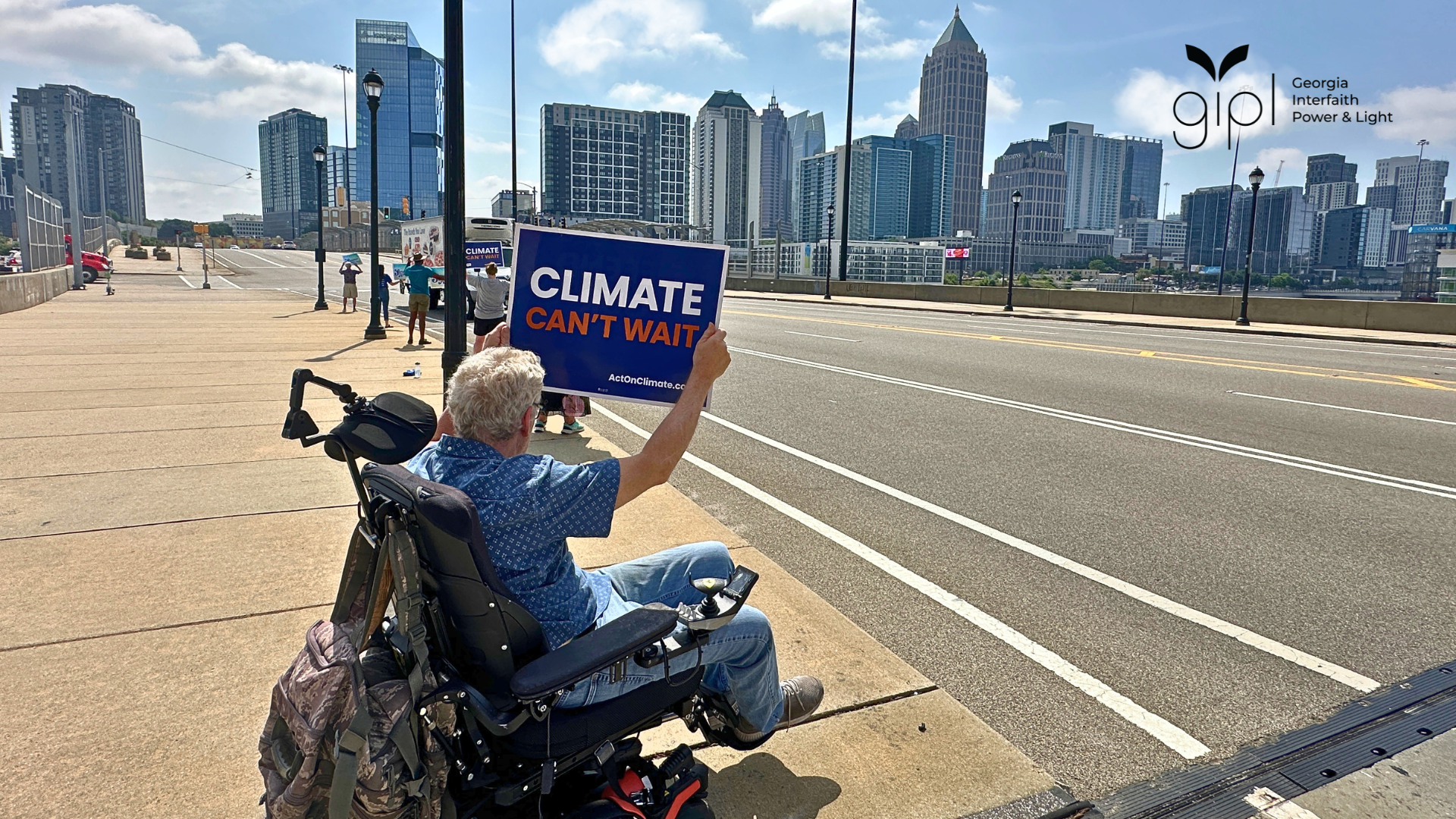
Written by Sam Warner, GIPL Communications Associate.
Summer is a rough time of year for me.
As part of the 75% of Americans living with chronic health conditions, I find that my symptoms are made worse by hot weather, even without record-breaking heat waves. I imagine this issue will only become more pressing as our climate continues to get hotter over time.
Many other disabled and chronically ill people around the world are wrestling with similar concerns. According to Rachel Reed of Harvard Law Today, “People with psychosocial disabilities have triple the rate of mortality in heatwaves.”
The science is clear that, like other vulnerable populations, disabled people face greater impacts from climate change. And yet, disabled people are less likely to receive official aid during or after climate disasters.
Worse still, well-meaning climate solutions can actually result in less access for disabled people. For example, new bicycle lanes added to a city street might render a bus stop wheelchair inaccessible, making it unusable for people who use wheelchairs and other mobility aids. Far too often, disabled people are literally left behind by these adaptations.
This Disability Pride Month, we at GIPL are thinking about how we can make sure no one is left behind in our pursuit of environmental justice. We’re thinking about ways to weave disability justice into our environmental work. That weaving starts with listening to disabled people.
As disabled authors Valerie Novack and Daphne Frias write in their article for the Stanford Social Innovation Review:
“Including people with disabilities in climate and environmental justice work, and following their lead will help us think beyond typical practices and assumptions and will empower us to address harms that we have yet to mitigate.”
As Novack and Frias point out:
“The same economic systems that exploit and undervalue the Earth’s resources also exploit and undervalue people with disabilities and the places they live.”
Addressing the crisis means acknowledging our interconnectedness, recognizing the sacred in each other, and trusting that disabled people are capable of being part of this work.
I am reminded of a verse about disability from my own faith tradition, Norse Heathenry:
“A limping man can ride a horse,
a handless man can herd,
a deaf man can fight and win.”
(Hávamál verse 71, translated by Dr. Jackson Crawford)
The Norse pagan tradition emphasizes the value and capability of disabled people. Several of our most beloved gods are disabled in some way, including Odin, Tyr, and others, yet this does not make them less worthy of worship. This is mirrored in other pagan traditions, such as in Irish polytheist worship of Nuada Airgetlám (“Nuada of the Silver Hand,” named for his prosthetic hand) or Hellenic worship of Hephaestus, a god depicted using mobility aids.
As The Troth says in their statement on disability in Heathenry:
“Designing accessible spaces and accessible events creates no difficulty for people who aren’t disabled. But for those with disabilities it is the key that gets them in the door. Without it, they stand outside, like Odin waiting for the door to open. If we say that doesn’t matter, then we deny that they have any wisdom to share with us or any gifts that they can bring to our communities. This is simply not true.”
Our work must start with an acknowledgement that disabled people have important wisdom and skills to bring to the climate conversation. Only then can we pursue solutions that are free of tokenism and paternalism. The same is true when it comes to other marginalized identities.
Frias recommends the following steps to include disabled people in our climate solutions:
Provide a seat at the table.
Listen to individuals with lived experience.
Work with disability leaders to find solutions.
These strategies reject the idea that disabled people are lesser or are less capable. They require us to embrace marginalized communities as equals who have an important part to play in this work.
One of my favorite disabled authors and activists, Leah Lakshmi Piepzna-Samarasinha, beautifully describes a vision of disability justice in their book, Care Work:
“We are not left behind; we are beloved, kindred, needed.”
As we continue our Disability Pride Month contemplation, I invite you to think about who is missing from the decision-making process in your community. Who has relevant lived experience, if only they were asked to share? Who are we not embracing in the way we should be?